Venues
Zurich Film Festival 2026: What's On, and Every Venue It Takes Over
21 min read
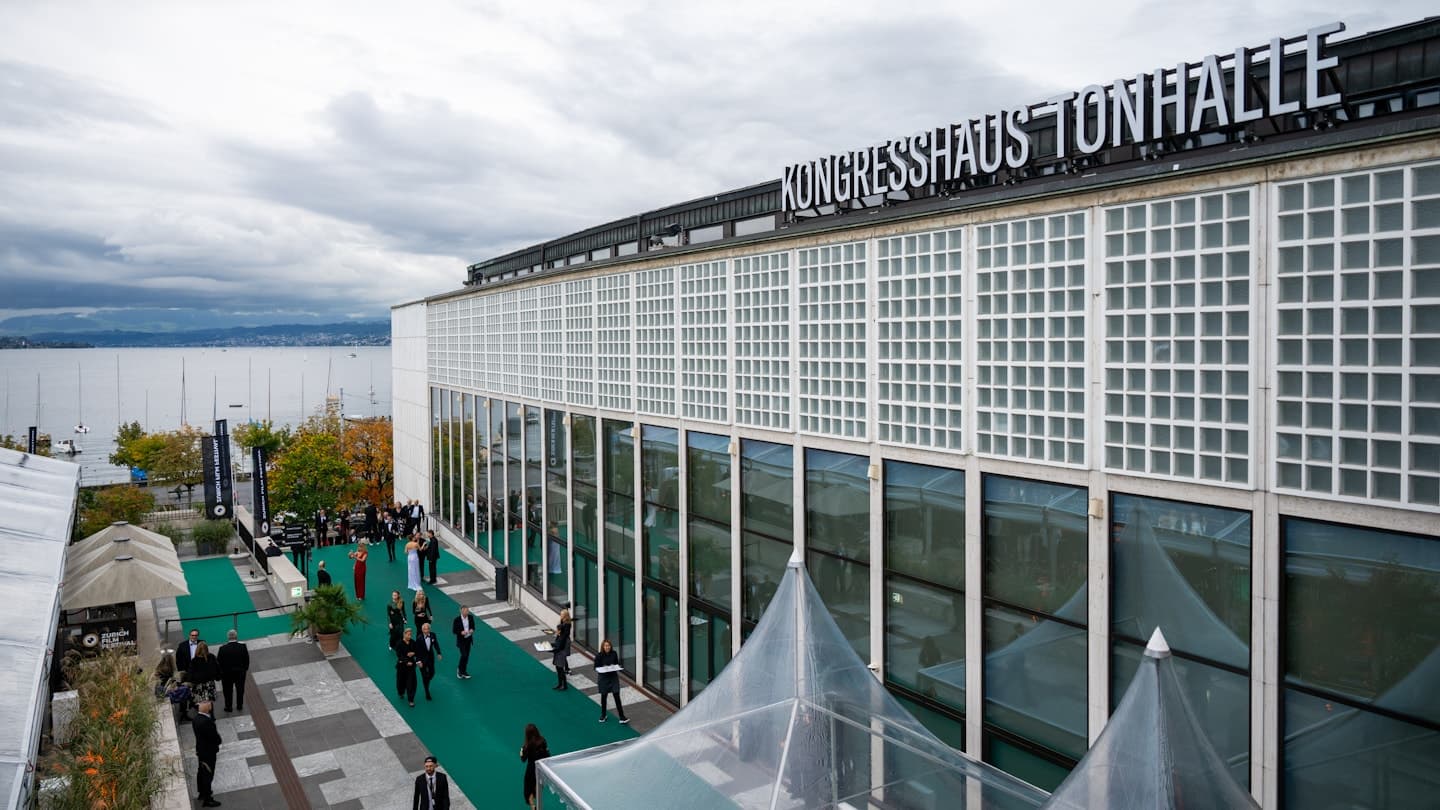
For eleven days every autumn, Zurich hands over its best rooms to the movies. A green carpet gets rolled out at the Kongresshaus, the Sechseläutenplatz grows a two-storey timber pavilion, and a lido on the Limmat that spends the summer as a women-only swimming bath turns into a VIP lounge with pagoda tents over the water.
The 22nd Zurich Film Festival runs 24 September to 4 October 2026. Below is what's confirmed so far, what a company can actually book around it — and the eleven venues the festival borrows, which are the more useful list, because nearly all of them will take your booking too, long after the carpet is rolled up.
What the ZFF Actually Is
It started in 2005 and grew fast. The ZFF now calls itself the second-largest film festival in the German-speaking world, and The Guardian has put it among the ten most important in Europe. Roughly 135,000 people come through it. It is run by CEO Christian Jungen and Festival Director Reta Guetg, with producer Martin Moszkowicz chairing the board since July 2026.
What distinguishes it from Locarno or Solothurn is the timing and the pitch. Late September puts it directly on the awards-season runway — studios use Zurich as the European launch pad for films that will be campaigning for Oscars in five months. That is why Hollywood names keep turning up on a square by Bellevue. The festival's shorthand for it is «Hollywood an der Limmat».
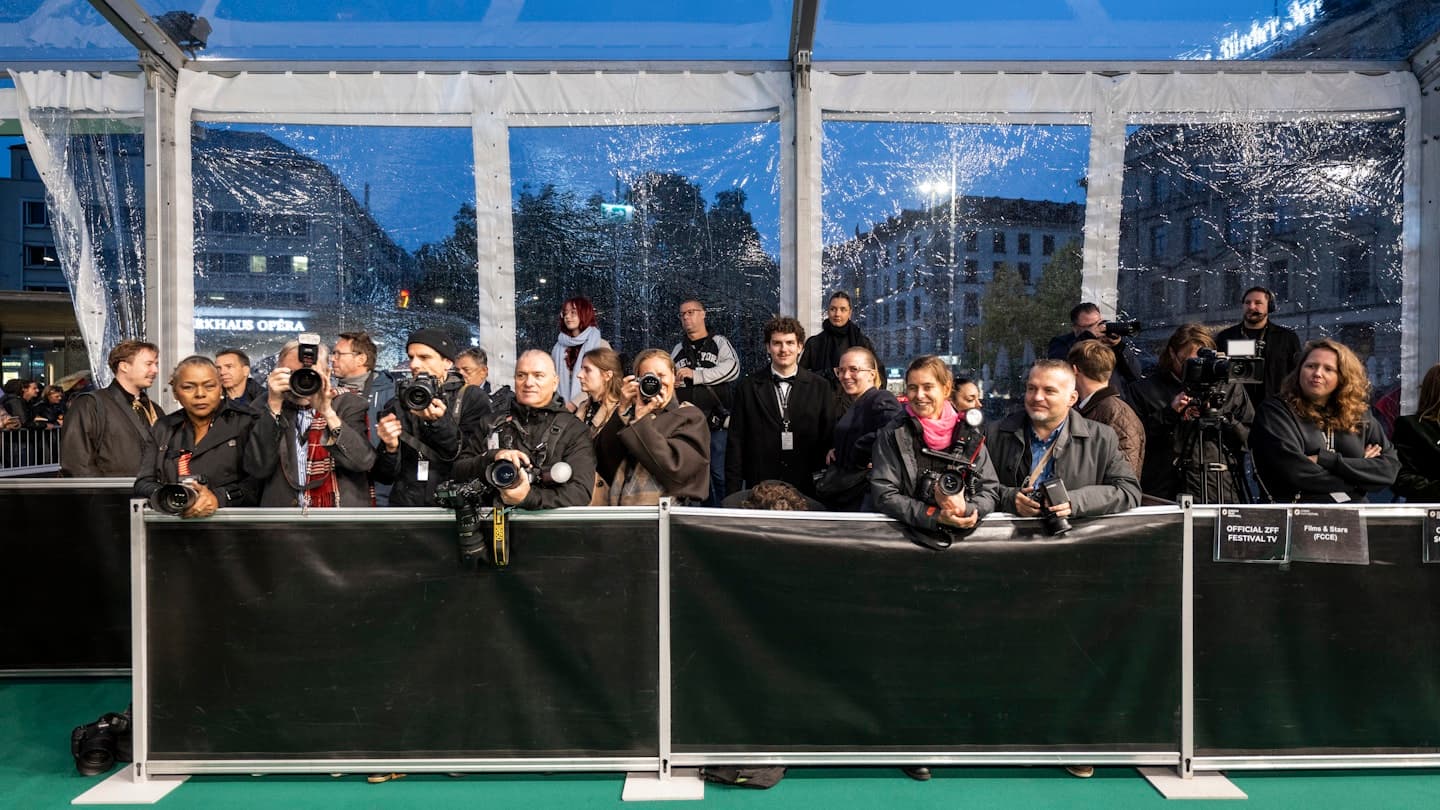
The programme splits into two competitions (Feature Film and Documentary, both playing for a Golden Eye), Gala Premieres, and the thematic sections Signatures, Hashtag, Now/Future, Sounds and ZFF for Kids. Alongside that sit the honorary awards — Golden Icon, Golden Eye, Career Achievement, Lifetime Achievement, and A Tribute To…
The 2026 Edition
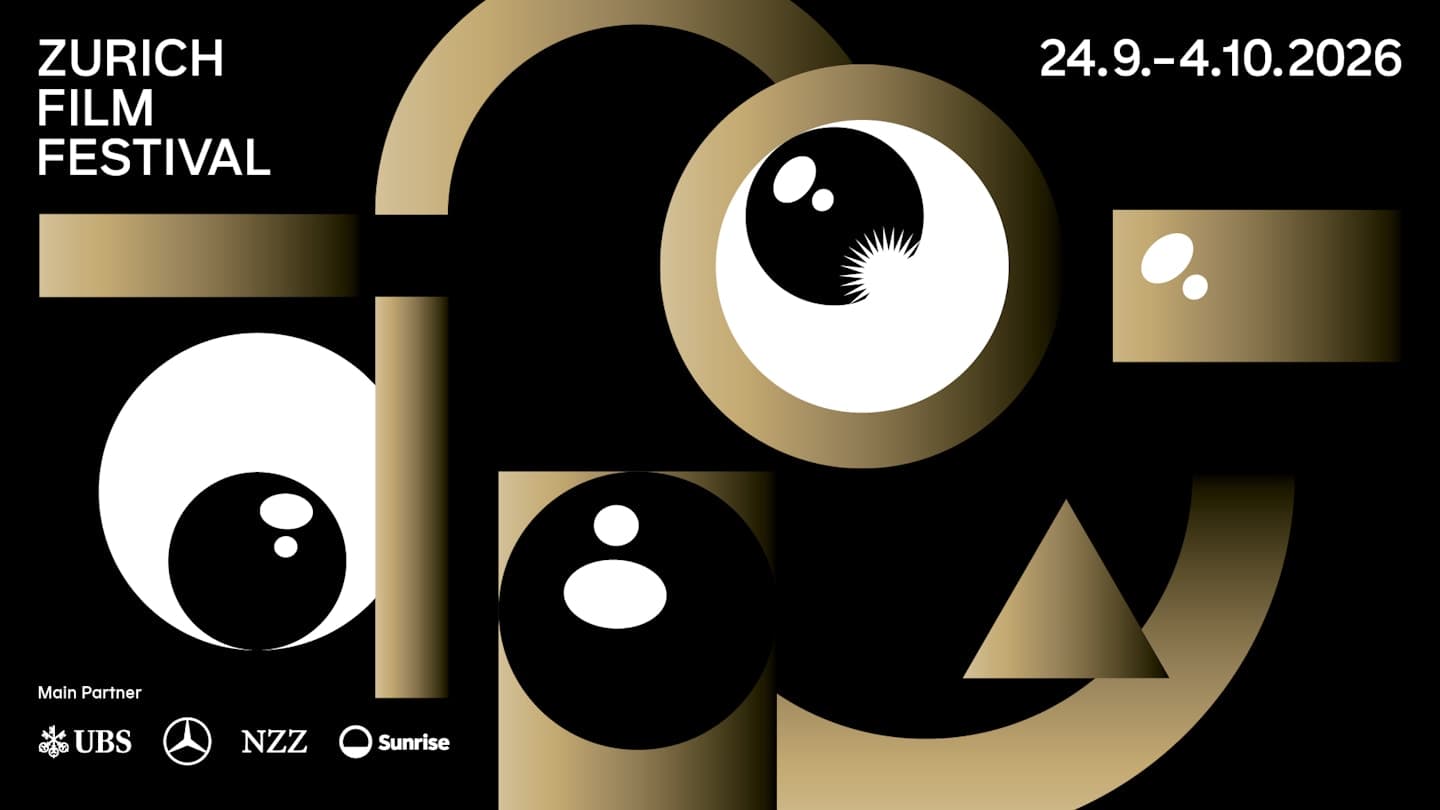
This year's motto is «dream big», and the opening film was chosen to match it. TENZING — Jennifer Peedom's account of Tenzing Norgay's 1953 Everest ascent, with Genden Phuntsok as Tenzing, Tom Hiddleston as Edmund Hillary and Willem Dafoe as expedition leader John Hunt — gets its European premiere at the Zurich Convention Center on 24 September. Hiddleston, Dafoe and Peedom are all expected on the carpet, in front of a room of more than 1,000 guests.
The honorary awards are announced:
- Julianne Moore — Golden Icon Award
- Naomi Watts — Golden Eye Award
- Martin McDonagh — A Tribute To… Award
- Richard Linklater — Career Achievement Award
- Gabriel Yared — Career Achievement Award
Twelve further Gala Premieres are confirmed, most of them fresh off Venice. Among them: BUNKER, Florian Zeller's thriller with Penélope Cruz and Javier Bardem; INK, Danny Boyle's film about Rupert Murdoch buying The Sun, with Guy Pearce and Claire Foy; BABIES, the European premiere of Lauren Miller Rogen's comedy with Anna Kendrick and Seth Rogen; Cannes favourite CLUB KID; and THE ONLY LIVING PICKPOCKET IN NEW YORK with John Turturro, Steve Buscemi and Giancarlo Esposito. Five films have their world premiere here — LOVE, AFTER ALL; HOW CAN I HELP?; THE HAMMER; BLOOD MONEY; and Frauke Finsterwalder's EUROTRASH.
The festival has gone ahead of its own schedule here, so it's worth being precise about what you can and can't look up today. The line-up is already browsable — the programme page currently lists 77 entries with directors, synopses, runtimes, languages and subtitles.
What isn't attached yet is the timetable. Open any gala and the Playtimes box says the same thing: «No screenings are currently available. The full film programme will be announced soon.»
Official programme release: Wednesday 9 September. Ticket pre-sale: Monday 14 September.
So you can already decide which film you want to build an evening around. You can't yet know when or where it screens, and that is the piece you need before you invite anyone. The ZFF Masters and ZFF Talks line-ups are also held for the 9th.
Three Side Formats Worth Knowing About
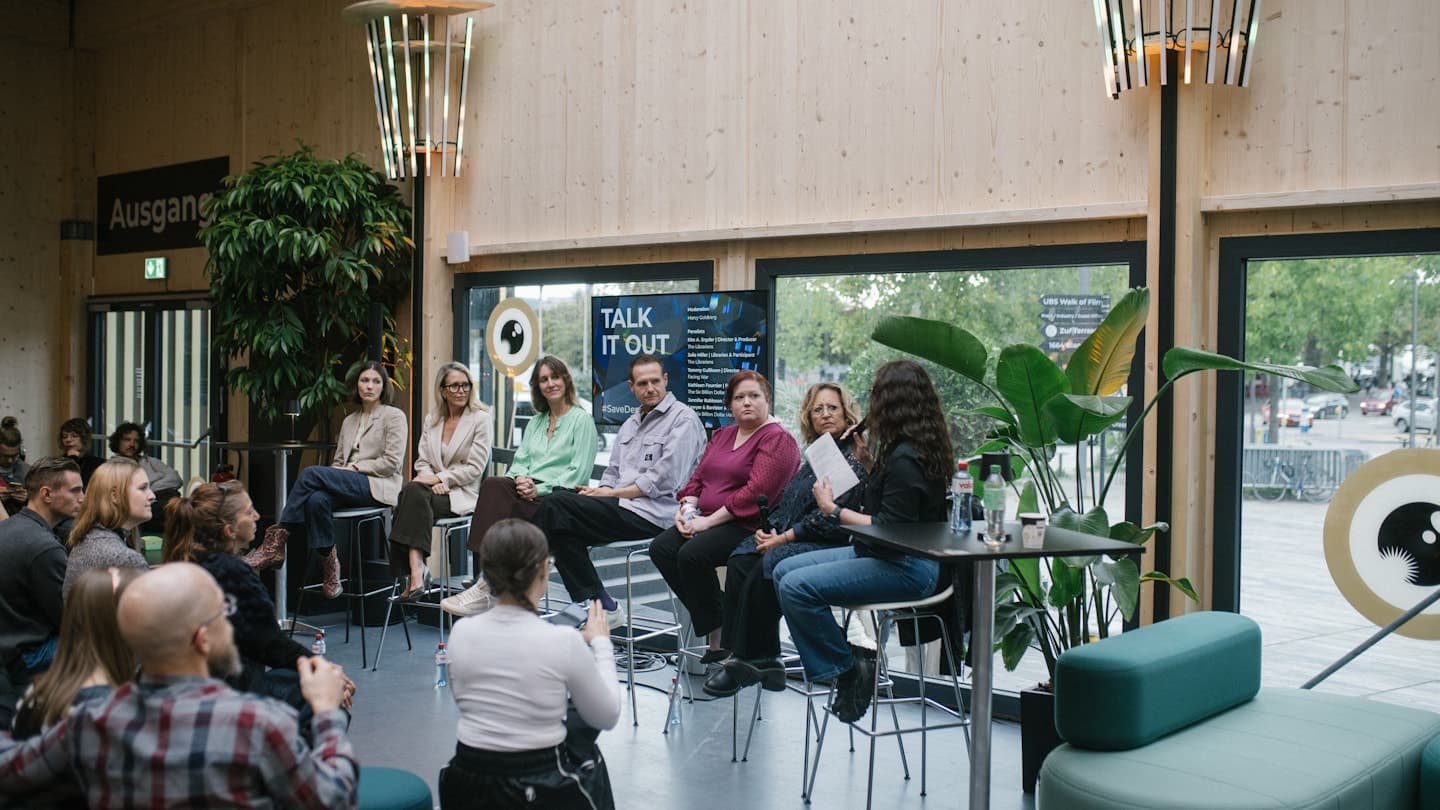
ZFF Masters are moderated career conversations with directors, actors and composers — public, and usually the most quotable hour of the festival. ZFF Talks are free panel discussions at the Festival Centre on film, culture and politics. Both line-ups are published on 9 September.
Cinema in Concert is the film-music gala at the Tonhalle: three finalists of the International Film Music Competition have their scores premiered live by the Tonhalle Orchestra Zurich, and the winner takes a Golden Eye for Best International Film Music. It is run jointly with the Tonhalle-Gesellschaft and Forum Filmmusik.
And for the industry, the Zurich Summit — a two-day boutique conference bridging the European and US markets — runs 25 to 27 September at The Dolder Grand, the Tennis Club Zürich and the terrasse Restaurant.
ZFF Genuss Film: The New One
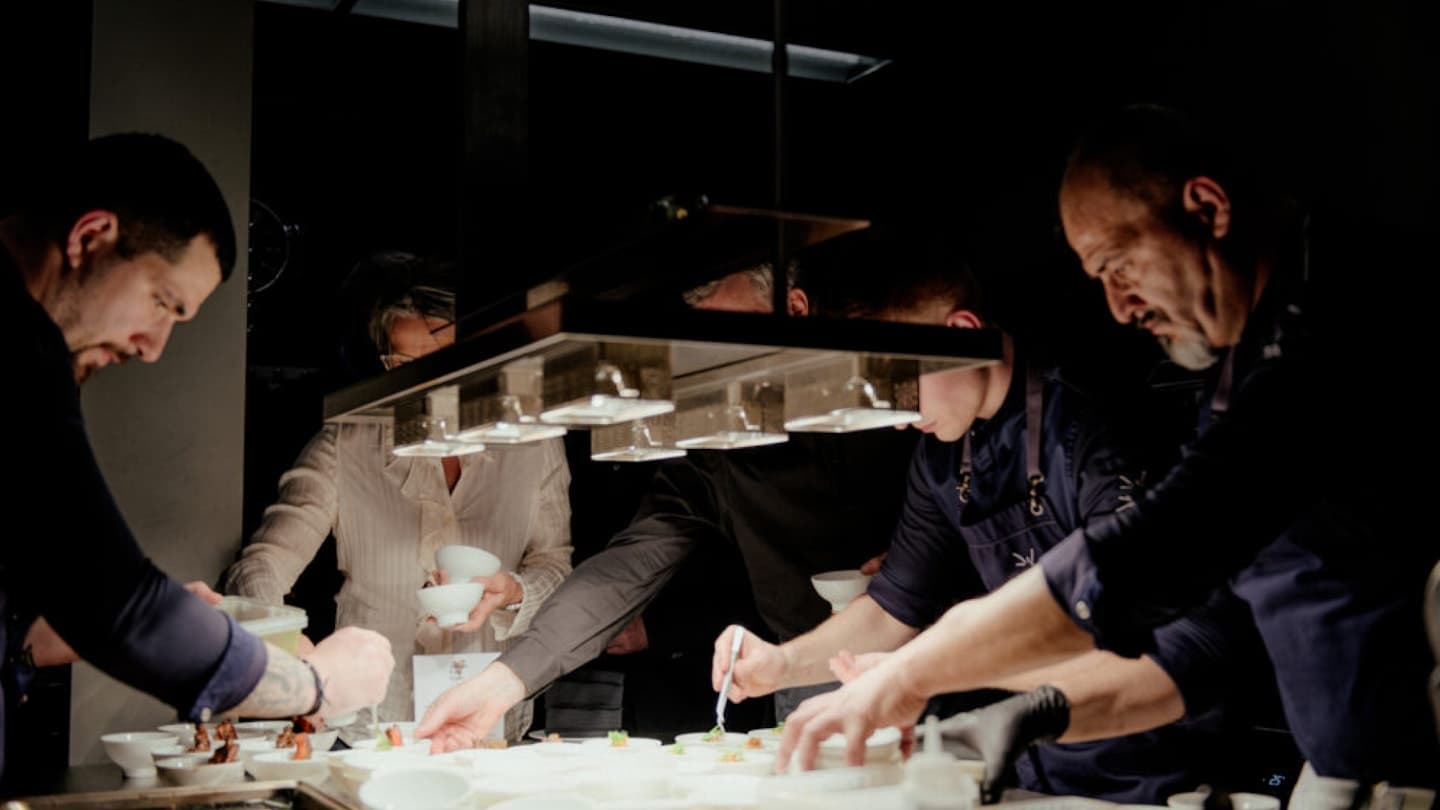
New for 2026, and the format most obviously built for hosting a table of guests. ZFF Genuss Film is a joint project with the Genuss Film Festival Zug, with Andermatt Swiss Alps as presenting partner. Three evenings, 30 September to 2 October, each pairing a film about food with a dinner cooked by Alpine chefs.
The Genuss Package runs to a fixed shape: welcome drink with caviar at the Papiersaal around 17:00, the film at Arena Sihlcity around 18:00, then a four-course dinner with wine pairings back at the Papiersaal from about 20:00. You can also buy the film alone.
- Wed 30.09 — The Creative Architects. André Kaiser (Culinary Director at The Chedi Andermatt, head chef at The Restaurant, 14 GaultMillau points) cooking with Niklas Oberhofer (1 Michelin star, 17 points). Film: NOOR: EATING HISTORY.
- Thu 01.10 — The Twins. Dominik Sato and Fabio Toffolon of The Japanese at The Chedi Andermatt — two Michelin stars, 18 GaultMillau points. Film: NOBU.
- Fri 02.10 — The Young Generation. Valentin Sträuli, Executive Chef at IGNIV Andermatt, GaultMillau's «Discovery of the Year» 2025. Film: ISABEL.
Tickets for all three are already on sale, which makes this the one part of the programme you can book before the 9th — and two of the evenings now carry confirmed times in the programme: Nobu / The Japanese on Thursday 1 October at 18:00, and Isabel / IGNIV on Friday 2 October at 18:15, both screening in Arena 3 before the room moves to the Papiersaal.
The Festival Centre — Sechseläutenplatz, 8001 Zürich
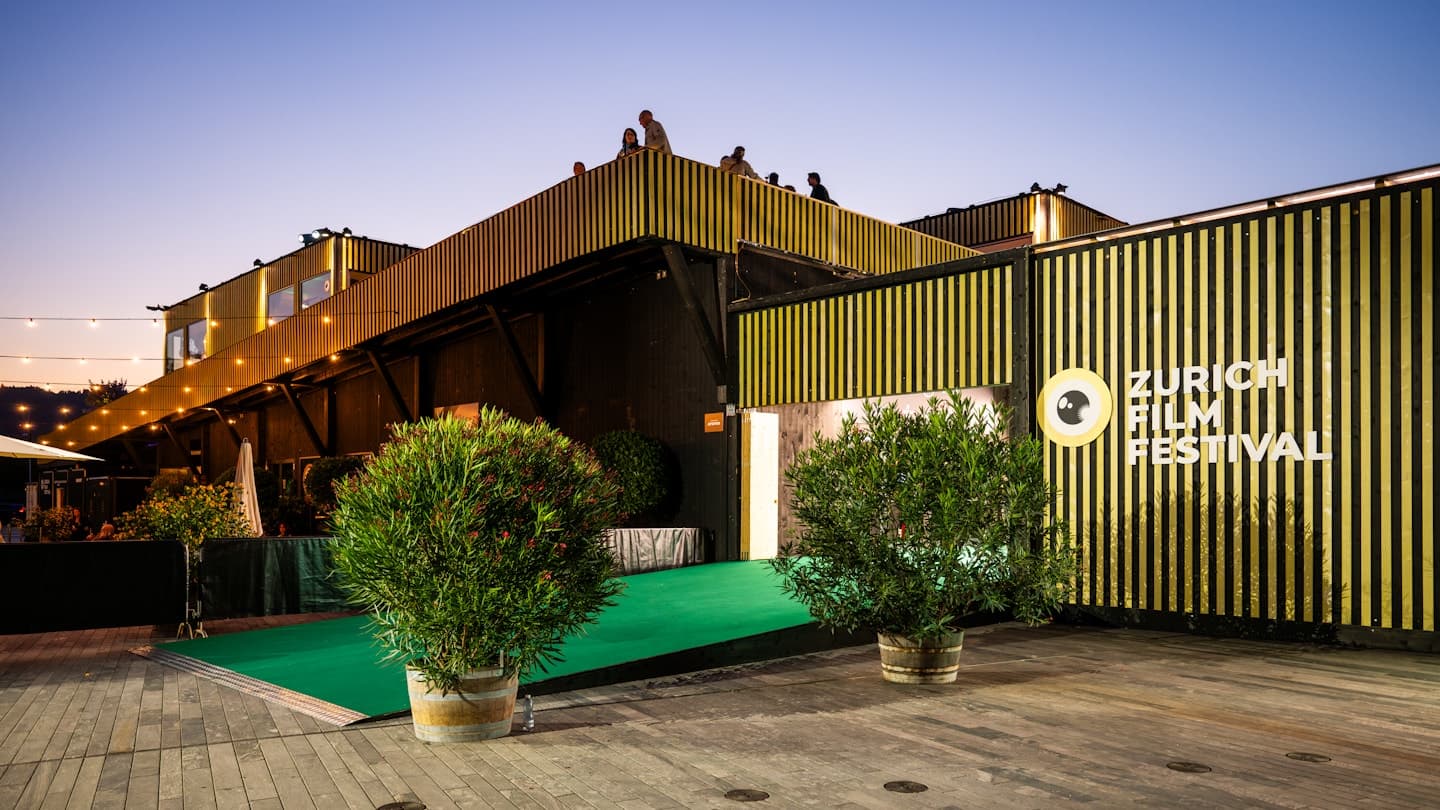
The hub, and the part most people underestimate. It sits on Sechseläutenplatz by Bellevue, it is free and open to everyone with or without a film ticket, and it runs 11:00 to midnight from 24 September to 2 October, until 02:00 on Saturday 3 October, and to 18:00 on the closing Sunday. Seven food trucks, a bar, the ticket and accreditation desks, the merch shop, and a terrace looking straight down onto the green carpet.
It is also the single best worked example of brand activation in Zurich, and worth walking through with a notebook if that's your job. In 2026 the square holds a Sunrise- branded Bellevue Lounge built around the festival's own «dream big» motto, a Mercedes-Benz Star Cam that shoots guests a glambot clip of their own, an NZZ rooftop bar, UBS's Walk of Film quiz with a signature mocktail as the prize, a Toblerone truck where you personalise your own sleeve, a FREITAG bag-o-mat you play to win a messenger bag, a Gisada fragrance pop-up, a 1664 Blanc Airstream, and Mobimo handing out branded apples at the bar. Digital Einstein takes conversations from 26 to 28 September.
None of that is subtle, and none of it is meant to be. What it demonstrates is the range: a sponsor presence here can be a rooftop bar or it can be free fruit.
Every Venue the Festival Takes Over
Here is the part that outlives the festival. The ZFF doesn't own a building — it borrows eleven of them for eleven days, the Festival Centre above being the first.
To be precise about what «festival venue» means here: all eleven are named on the ZFF's own Plan and Travel page, which is the festival's official location list. What the ZFF publishes there is the address and the tram stop — not, in most cases, which screenings or parties land where. So below, each entry separates the two: what the festival confirms, and what the venue itself publishes about hiring it. Capacities come from the operators, not from us, and where an operator doesn't publish a number we've said so rather than guessed.
Zurich Convention Center — Claridenstrasse 5, 8002 Zürich
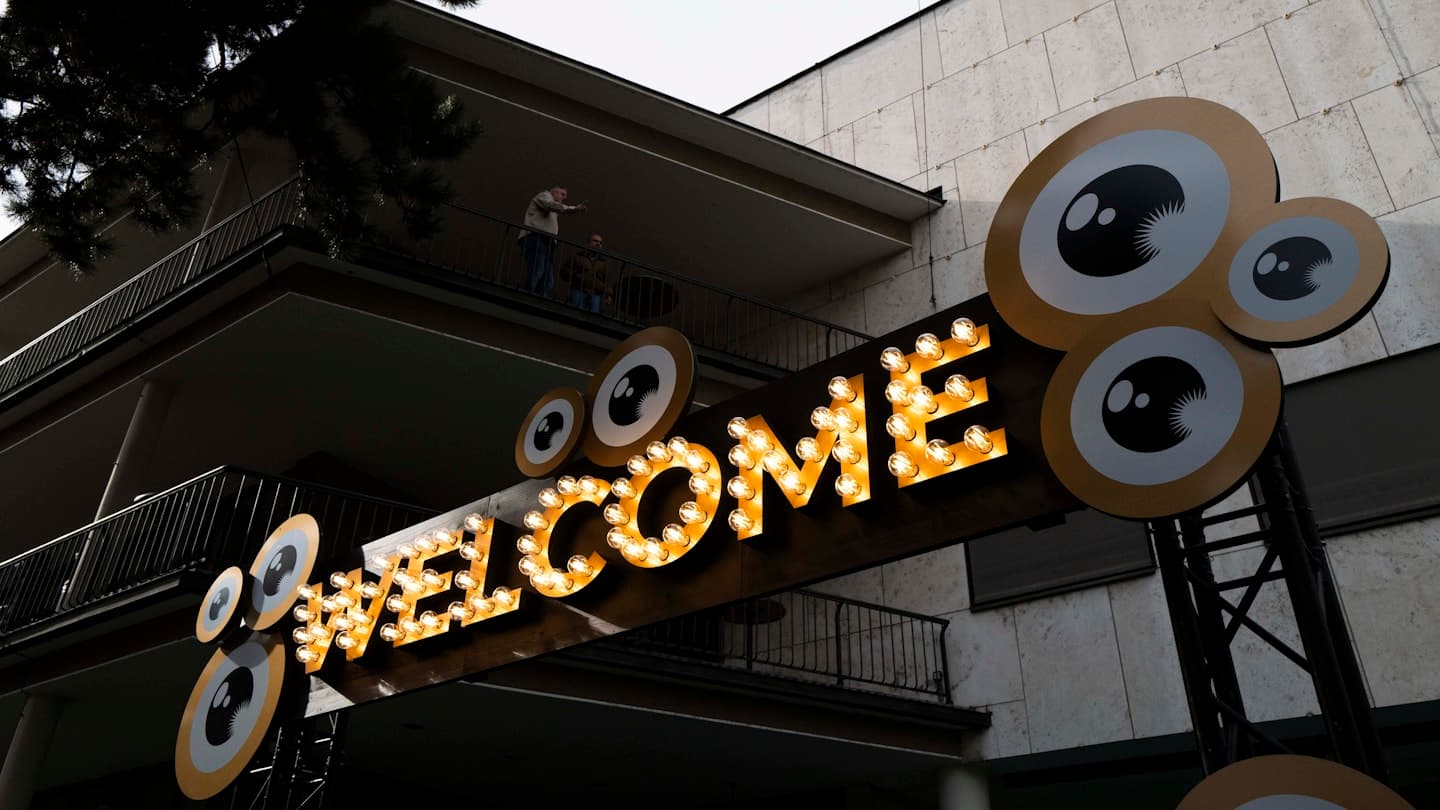
The Kongresshaus, on the lake at Bürkliplatz. This is where the Opening Night, the Award Night and the big galas happen, and where TENZING screens on 24 September.
Booked directly it is the largest venue on this list by a distance. The house publishes over 20 rooms and more than 5,300 m² of event space, plus the historic Tonhalle halls next door adding over 2,000 m² — together good for events of up to 4,500 people.
The largest single room is the Kongresssaal: 865 m², 1,125 theatre-style or 600 for a banquet, rising to about 1,665 theatre-style once the gallery opens. Below that sit the Grosse Tonhalle (457 m², 816 theatre, 360 banquet), the Gartensaal (519 m², 600 theatre, 330 banquet) and a long tail of Seezimmer and Vortragssäle for 40 to 180. Inhouse catering, and fully renovated in 2021. It already appears in our corporate event round-up, and it is the default answer when the guest list runs past a few hundred.
Tram 2, 5, 8, 9, 11 to Bürkliplatz or Kantonalbank.
blue Cinema Corso — Theaterstrasse 10, 8001 Zürich
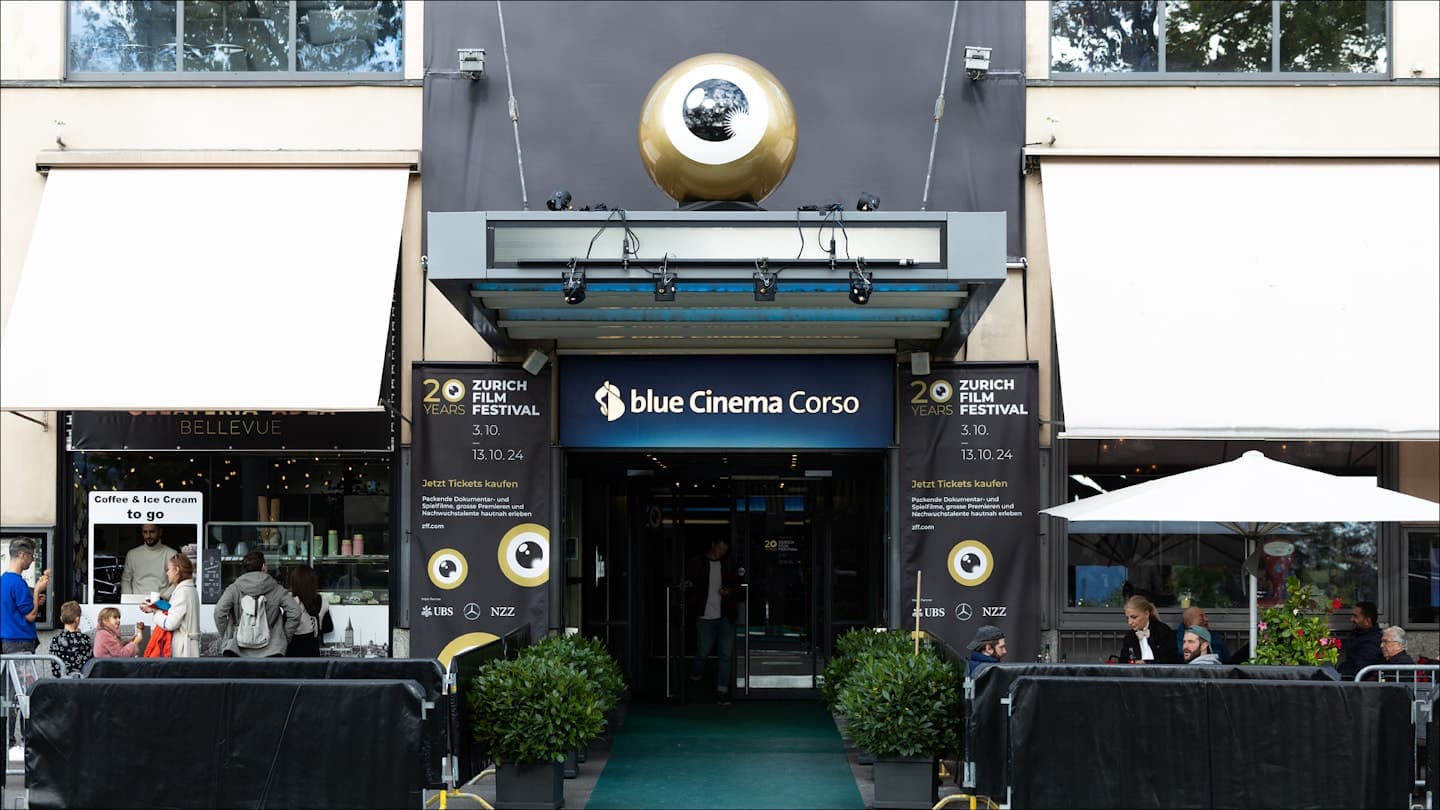
A former theatre thirty seconds from the Festival Centre, and the most photographed doorway of the eleven days. Saal 1 is the reason: a historic auditorium with a balcony and a stage that still feels like a playhouse.
Four halls, of which Saal 1 is the draw — the old auditorium, with a balcony above the stalls. blue cinema rents them out for private screenings, product presentations, training days, anniversaries and workshops, and the large, bright foyers take the apéro or a standing lunch, with catering from snacks up to a full buffet. The published floor is events from 60 people; the operator doesn't publish per-hall seat counts, so ask for the Corso factsheet rather than trusting a number off a listing site.
Tram 2, 4, 5, 8, 9, 11, 15 to Bellevue.
Arthouse Le Paris — Gottfried-Keller-Strasse 7, 8001 Zürich
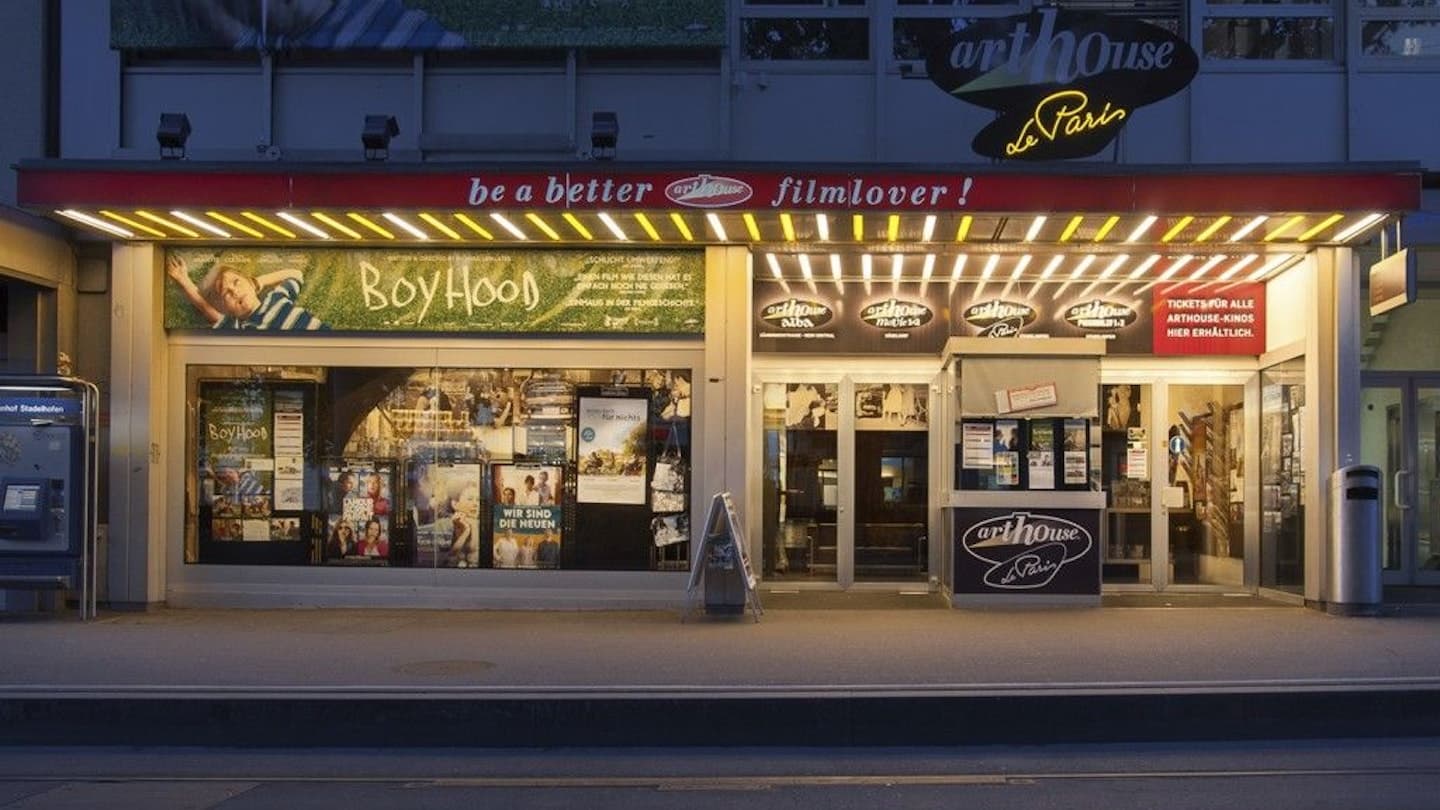
Behind the Opera House, and the grandest of the arthouse rooms. It opened in 1963 with 485 seats and was renovated in 1998; today the hall counts 311 seats, with a further 95 on the balcony reached by a curved spiral staircase. 4K laser projection, Dolby Digital, and a satellite feed for live events. Since the 1998 renovation the walls have carried Edward Quinn's photographs of 1950s and 60s Hollywood stars, which is a set dressing you don't have to pay for. Rentable for private screenings through the Arthouse group.
Tram 2, 4, 5 or the train to Stadelhofen; tram 11, 15 to Opernhaus.
Arthouse Piccadilly — Mühlebachstrasse 2, 8008 Zürich
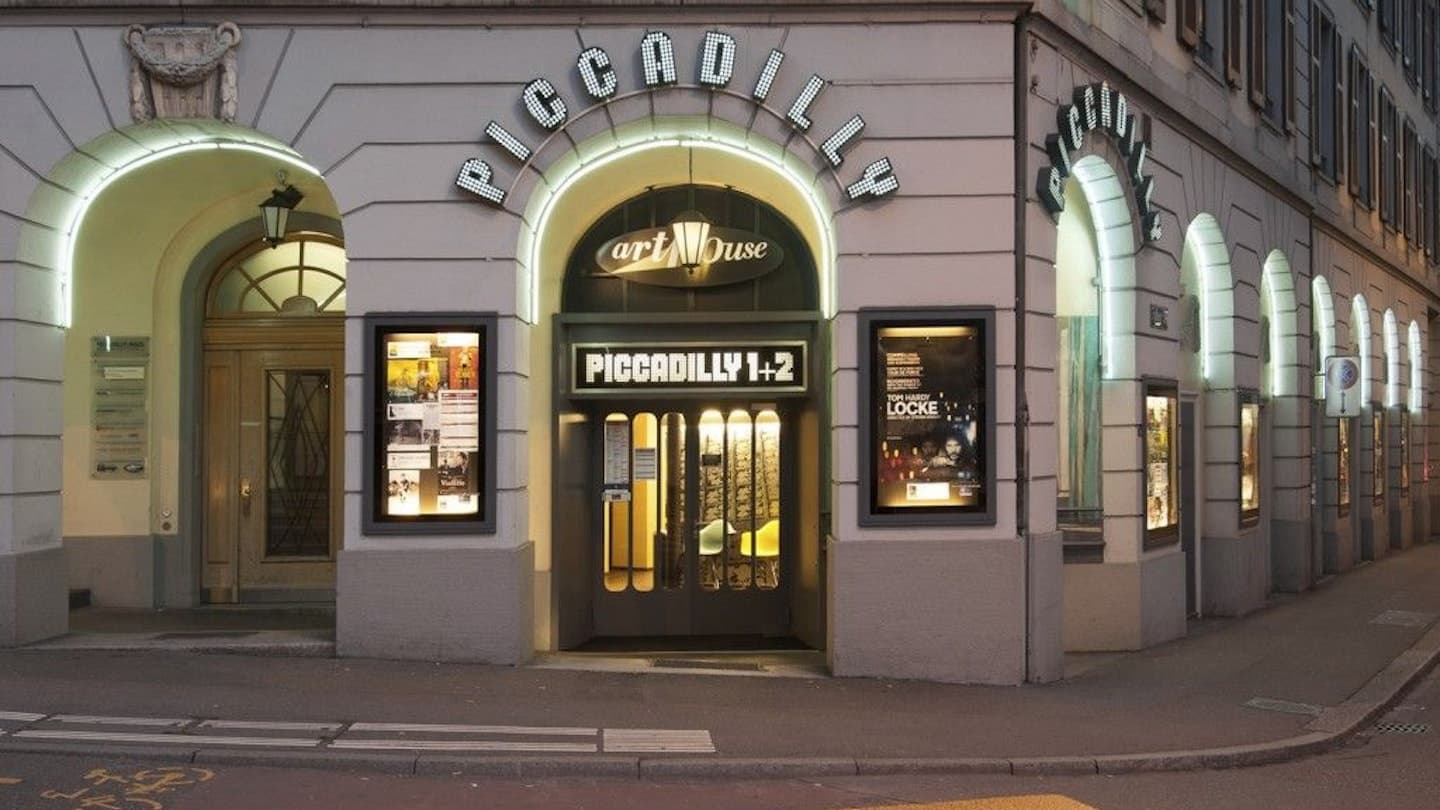
Two rooms, 183 seats and 40 seats. The smaller one opened in 1973 as Zurich's first Kleinkino, and the foyer and Saal 1 are hung with photographs of Warhol's Factory. The 40-seater is the right size for a screening you actually want people to talk after — a premiere for a client list rather than an audience.
Stadelhofen, or tram 11, 15 to Opernhaus.
Arena Cinemas Sihlcity — Kalanderplatz 8, 8045 Zürich
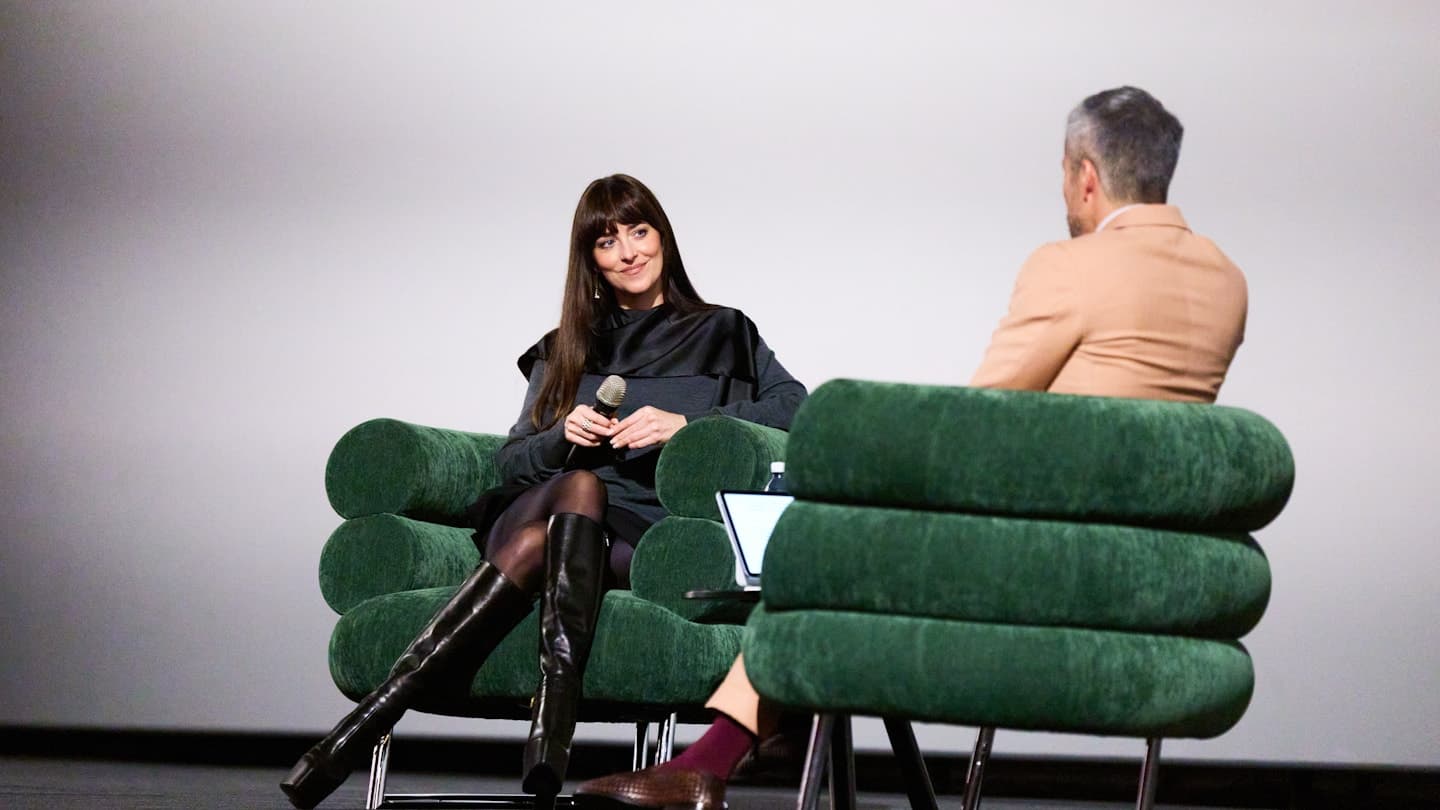
The multiplex, and where the ZFF Masters conversations tend to land. Eighteen halls running from 41 to 521 seats, which is the widest capacity ladder in the city under one roof — you can put 45 people in a room without it feeling empty, or 500 without splitting them up.
Arena runs a proper business-events desk for private screenings, product presentations, AGMs and graduation ceremonies, with a separate catering area, parking, and — their own selling point — several ways to put your company logo up in the event area.
Tram 5, 13 to Sihlcity Nord.
KINOKONI — Lagerstrasse 104, 8004 Zürich
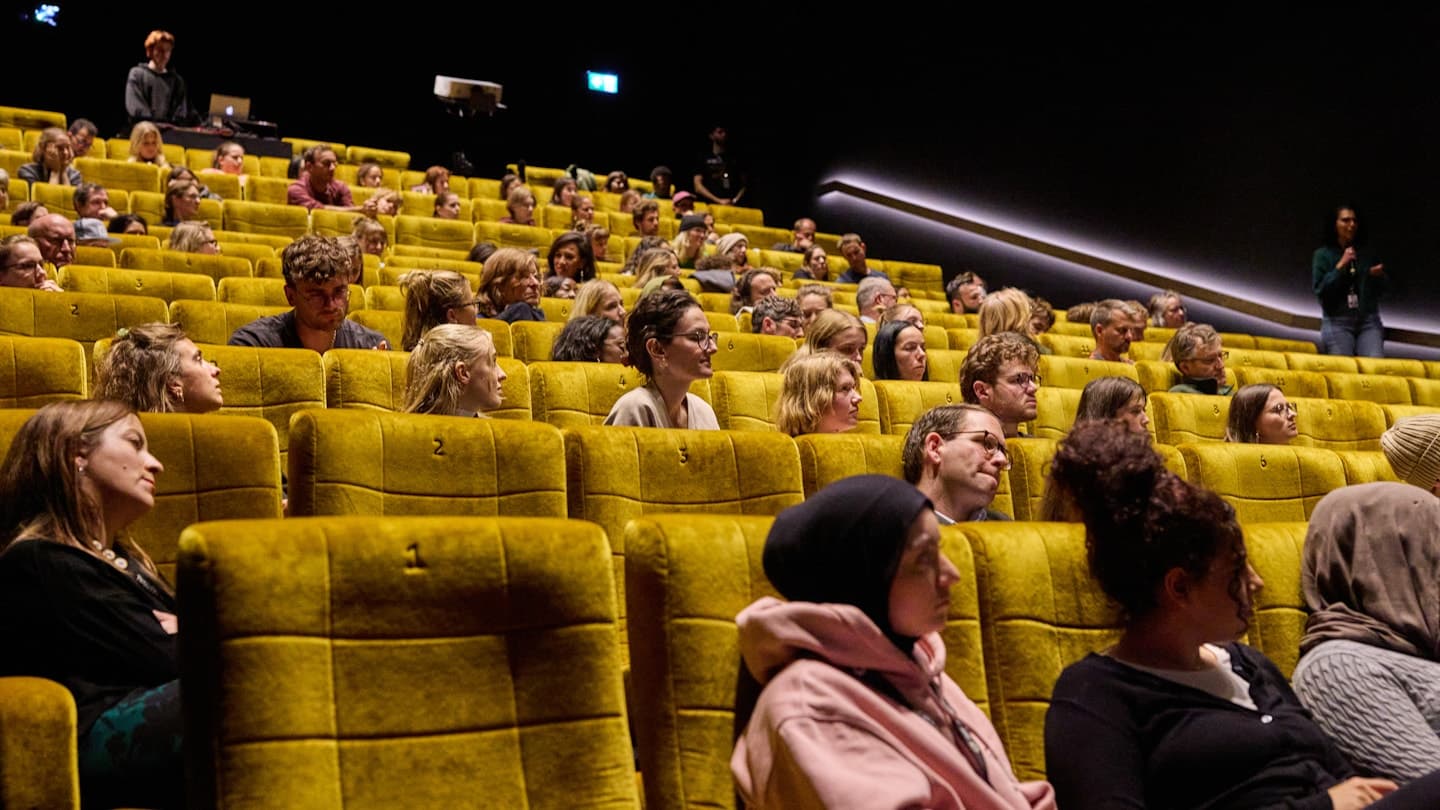
The one with the identity crisis. Most of Zurich still calls it Kosmos; then it was Frame; since entrepreneur Konrad Schibli took over the lease it runs as KINOKONI, a boutique cinema on the London model where food and drink are served to your seat.
Six halls: 222 seats with Dolby Atmos, then 184, 97, 96, 95 and 81. Two rooms outside the cinemas matter more for events, though: a 135 m² foyer and lounge looking straight out over the railway tracks, which the house offers for conferences, talks, readings, apéros and concerts, and the 100 m² Ikonik Bar for the drinks half. In the Europaallee behind the main station, which makes it the easiest venue on this list to reach from anywhere in Switzerland.
Bus 31, 32 to Militär/Langstrasse, or five minutes on foot from Zürich HB.
Folium and Papiersaal — Kalanderplatz 6, 8045 Zürich
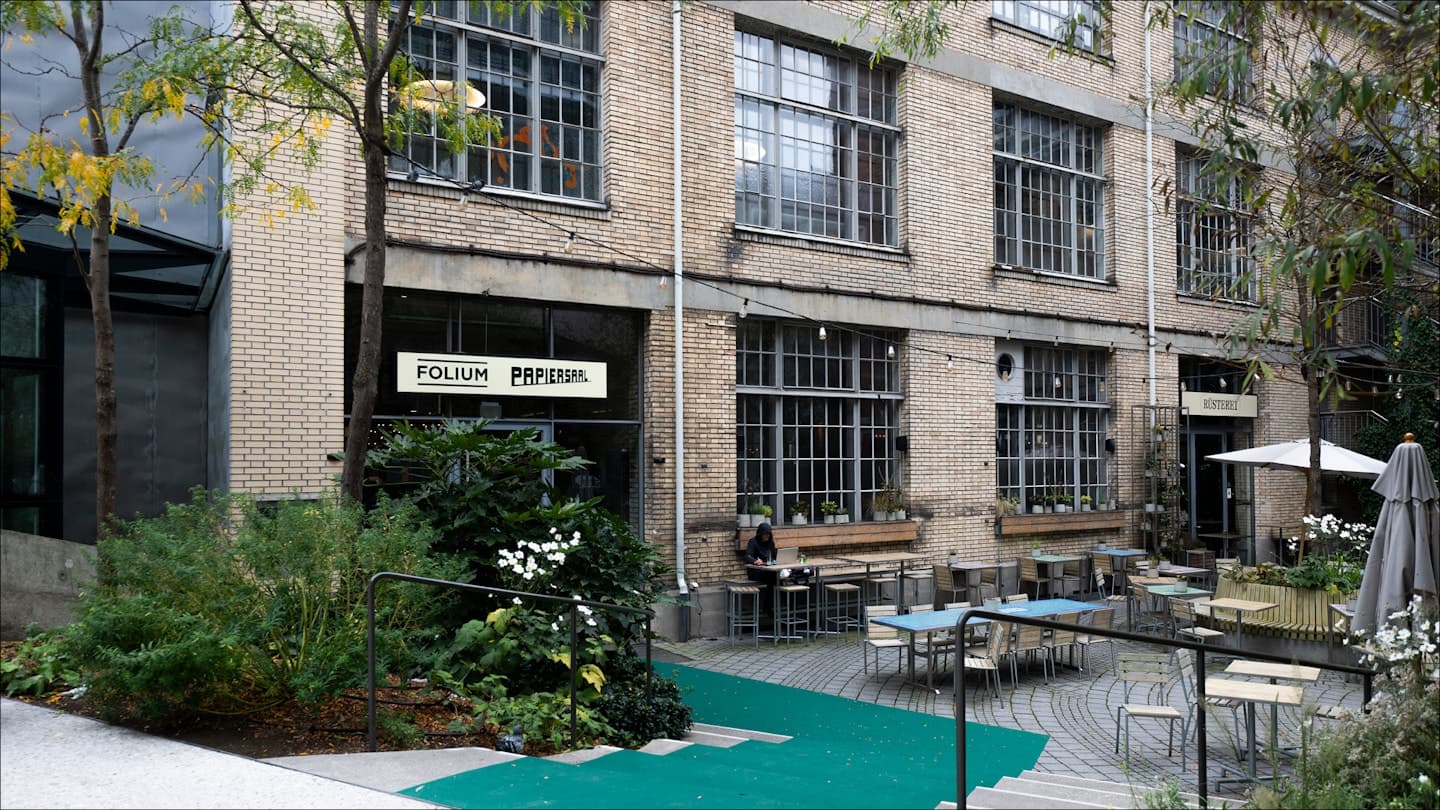
Two halls in the old Sihl paper mill, one above the other, and where the Genuss Film dinners are served. Together they are the most flexible corporate space in Sihlcity.
Papiersaal (upper floor, 442 m²) has one of the longest bars in Zurich: 200 for a flying dinner with dance floor and stage, 100 for a seated dinner with the same, 150 for a presentation with audience seating. Folium (lower floor, 415 m²) is the white, modular one, built for branding — movable walls and white surfaces that take a corporate identity cleanly: 100 for a seminar with apéro, 150 for a lecture with workshops and breakouts, 150 to 300 for a showroom or product presentation with stage and apéro.
Rented as a pair they run 60 to 600 people, and for anything over 150 with a varied programme the two-storey setup is what the house itself recommends. If your event has a presentation downstairs and a party upstairs, this is the building.
Tram 5, 13 to Sihlcity Nord.
Frauenbadi — Stadthausquai 12, 8001 Zürich
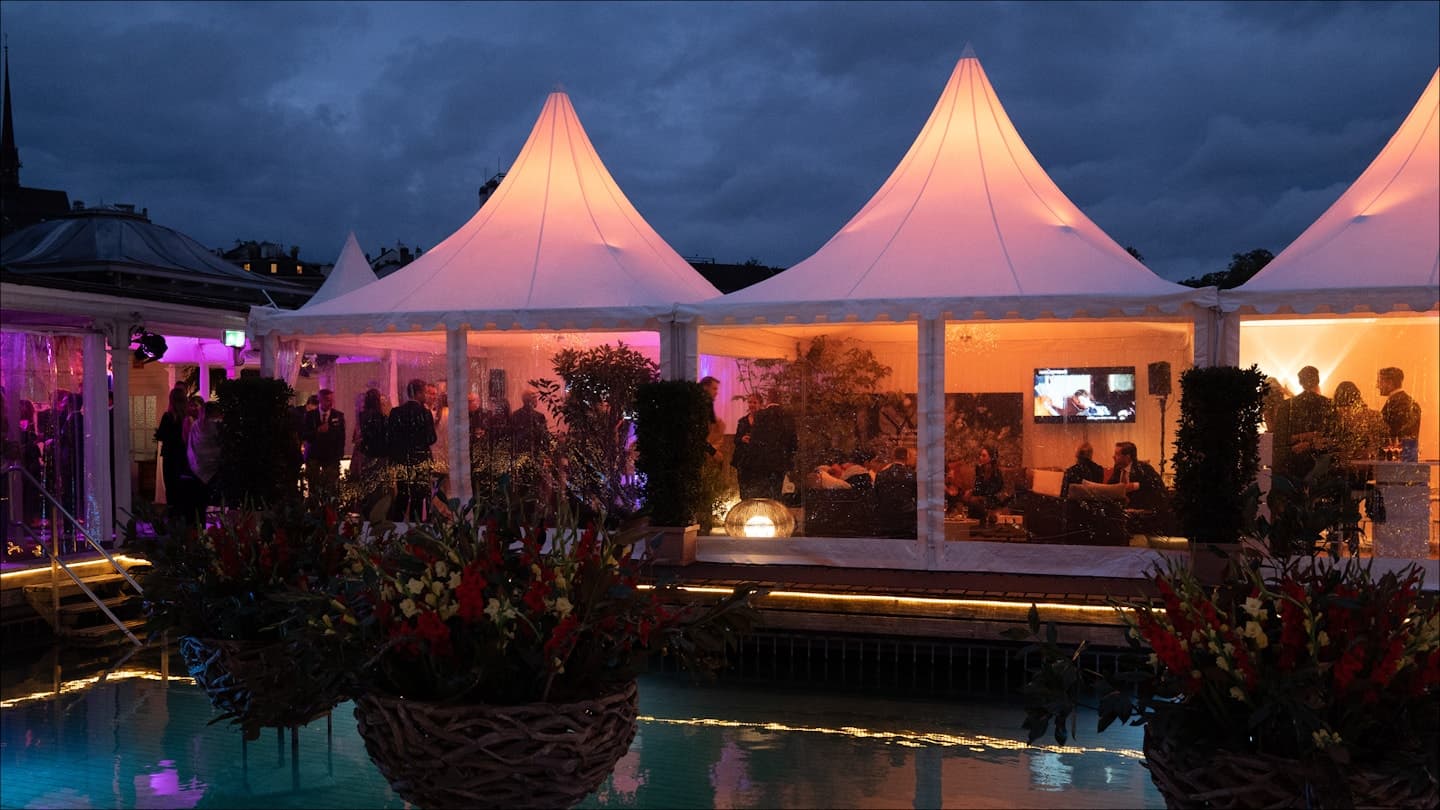
The 1888 women's swimming bath on the Limmat, a wooden deck built straight out over the water. By day in summer it is women-only; in the evening it becomes the Barfussbar, and during the ZFF it becomes a lounge with pagoda tents, ice bars and uplighting, as above.
And this is the one venue on the list that sells the festival connection itself. The Barfussbar's own event page says that every September the bar gets dressed up for the Zurich Film Festival, and that for a surcharge you can hold your own event in that setting — heated pagoda tents, decorated, carpeted and lit. That is an explicit, bookable offer from the venue, not an inference from the festival's location list.
The numbers, from the operator: 60 to 300 guests, larger groups on request; parties of 20 to 59 can instead reserve a corner at the Thursday «Sounds am Dunnstig». Base rent CHF 2,450 plus VAT, with a minimum spend of CHF 140 per guest on top, and catering has to come through the Barfussbar. Free cancellation up to 90 days out for a CHF 300 fee.
Two timing catches. Through the bathing season, private hire runs Monday, Tuesday, Friday and Saturday, 20:00 to midnight, with guests out by 00:30. But at the edges of the season — 13 April to 8 May, and 22 September to 25 October 2026 — you can hire it any day of the week, daytime included. The festival falls inside that second window, which is exactly why it can host an all-evening ZFF event at all. Outside those dates the Frauenbadi is simply shut: this is a seasonal venue, not a year-round one.
There is nothing else in Zurich that puts your guests on the river rather than beside it.
Tram 2, 5, 8, 9, 11 to Bürkliplatz.
Palais Mascotte — Theaterstrasse 10, 8001 Zürich
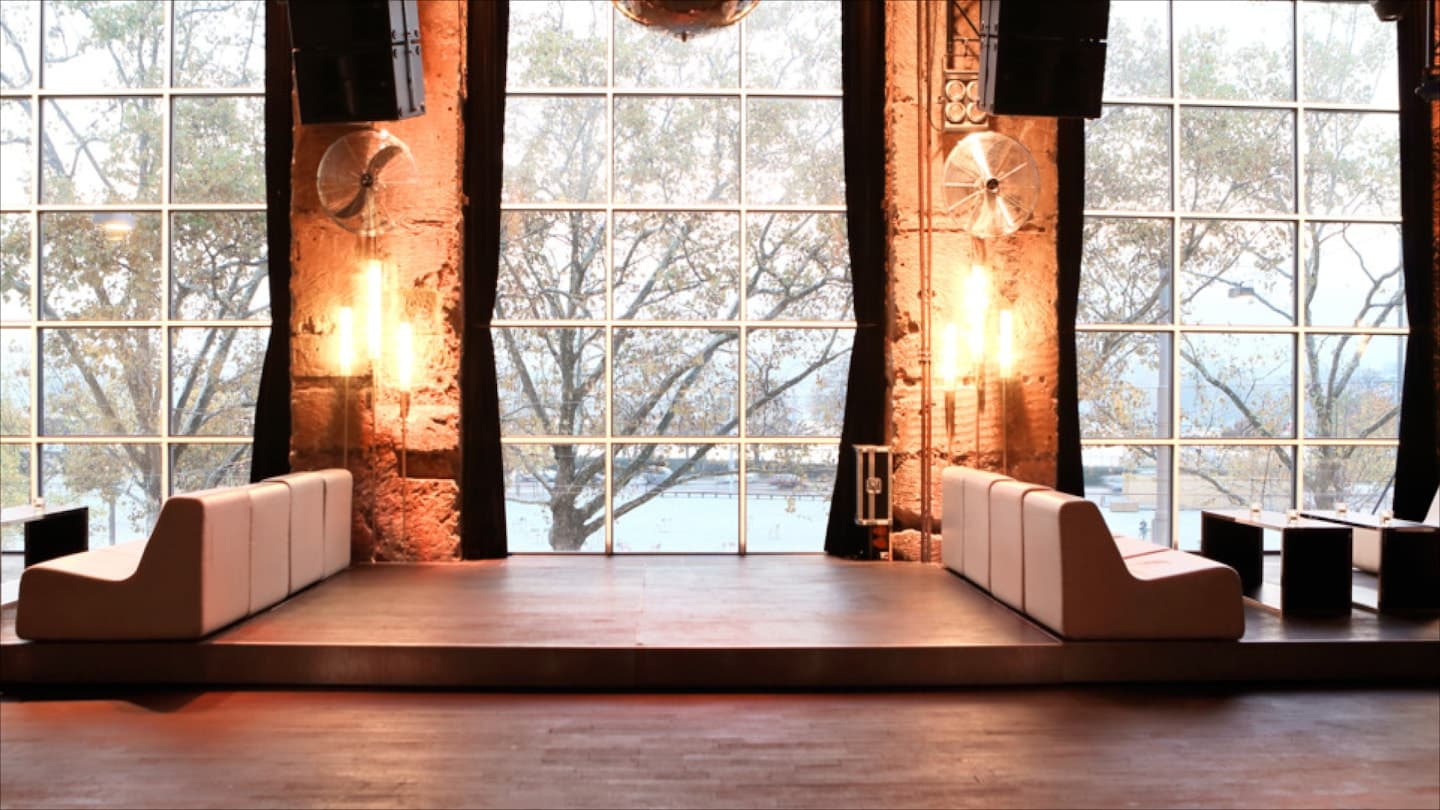
Same street number as the Corso, right at Bellevue. The house brands itself «Palais-Mascotte 1916» and claims over 110 years of history on the site; it is currently mid-relaunch, with the new Palais Bar opening on 10 September 2026, two weeks before the festival starts.
The ZFF lists it as a festival location but doesn't publish what it uses it for, so we won't guess — the programme on 9 September is what will say. What the venue itself publishes is the hire offer: three spaces, Club, Bar and Loft, pitched at corporate events, workshops, presentations and award ceremonies as much as at private parties, anniversaries and civil weddings. The draw in the photograph is the big historic window front onto the lake. No capacities are published; enquiries go through their site.
Bellevue or Stadelhofen.
NZZ Festival Lounge and NZZ Sky Lounge — Falkenstrasse 11, 8008 Zürich
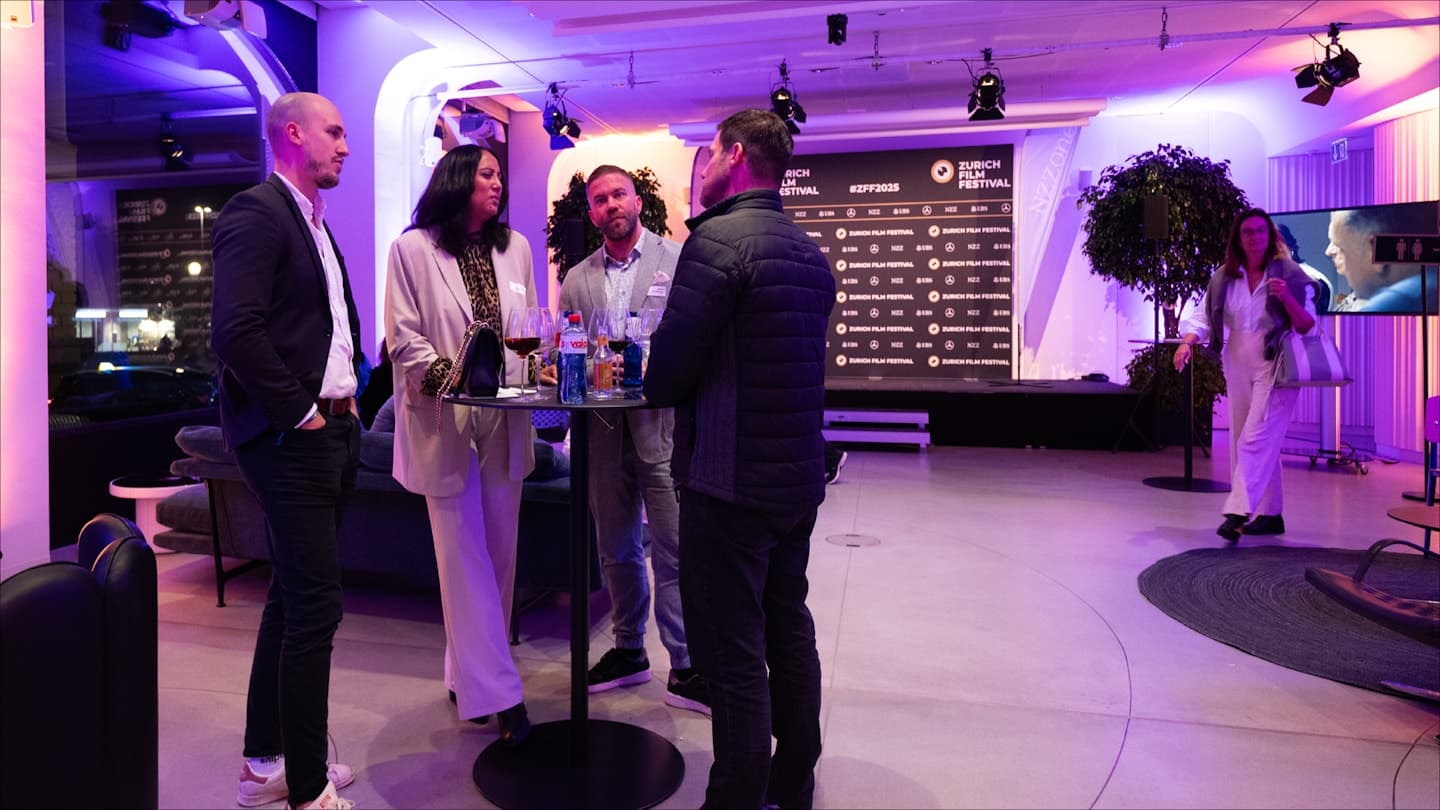
Two rooms in the NZZ building by Stadelhofen — a ground-floor lounge and a Sky Lounge up in the Dachstock — and the one venue here with a split personality.
The photograph above is its partner face: a reception room with a sponsor wall, reached through accreditation or a partner arrangement rather than a booking form. But the published programme shows the other half, and it's the opposite of exclusive. Four of the festival's children's workshops run in the NZZ Festival Lounge — Musical and Horrorszene drehen on Saturday 26 September, the SRF Kids reporting workshop on the Sunday, Green Screen and Sound Effects on Saturday 3 October — with the acting workshop up in the NZZ Sky Lounge on Wednesday 30 September. Ordinary ticketed events for kids, in the room with the sponsor wall.
The ZFF publishes no capacity or hire terms for either room, so this is one to ask about rather than plan around.
Stadelhofen, or tram 11, 15 to Opernhaus.
Hosting Your Own Event at the ZFF
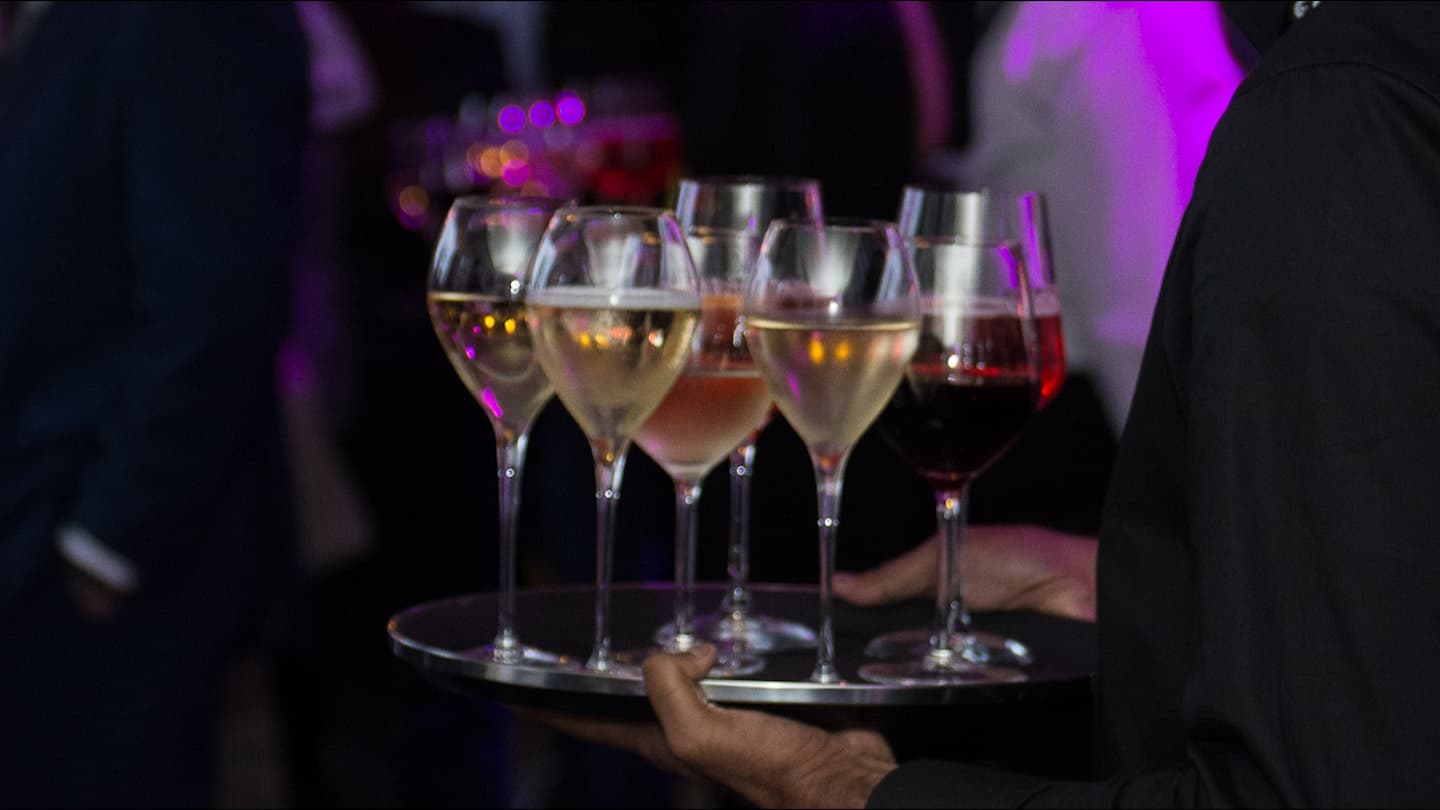
The festival sells this directly, and it is more approachable than it looks. There are two tiers.
A corporate event around a premiere. You take a screening in a venue reserved for your group and combine it with an apéro handled by the festival's catering partners. Your guests see a film before it opens, in a room with a festival on around it, and nobody has to organise the film. The ZFF quotes these individually and will produce a non-binding offer; the enquiry runs through the Your ZFF Event page.
A partner package. The bigger commitment, from a small tailored collaboration up to main or co-partner. What you are buying, in the festival's own framing, is publicity, relationship management and exclusivity — media coverage, an emotional setting for clients, and access to the VIP side. The numbers they quote from the 2025 edition: 135,000 visitors, 6,700 articles in the media, 12 million social reach during the festival, 207,000 followers. Enquiries go through the Become a Partner page.
Worth knowing: since March 2026 marketing, partnerships and hospitality all sit with one Managing Director, Mehmet Inan, which in practice means one conversation rather than three.
What It's Actually Good For
Three cases, because the festival suits them very differently.
Corporate hospitality and client events — the strongest fit. A premiere does the work an ordinary company evening has to manufacture. There is a reason to be there that isn't you, a shared thing to react to, and forty-five minutes of conversation afterwards that starts itself. The trap is scale: gala tickets are finite and the rooms are committed, so a group of twenty is far easier to place than a group of two hundred, and late September is the wrong month to decide this. If your list is large, the Kongresshaus or a private screening at Arena is a surer route than a gala.
Brand launches — good, with a caveat. The Festival Centre proves the mechanism works: you get a defined audience in a receptive mood, and for eleven days the square is a genuine destination rather than a thoroughfare. But you are launching inside somebody else's story, and the coverage will be about the films. That is fine if your product benefits from adjacency — fashion, watches, cars, drinks, anything cultural. It is worse if your launch needs the room's full attention, in which case you want the Folium's white walls and your own night, not a green carpet fifty metres away. A product launch works better because of the festival than at it.
Community events — the underrated one. This is where the ZFF is unusually generous, and where most people don't look. The Festival Centre is free. ZFF Talks are free. ZFF for Kids runs its own programme, there is a Family Day, and there are school screenings. Some of it is already timetabled: ZFF Family Day on Sunday 27 September from 11:00 at the Festival Centre, and a run of children's workshops — game design, acting, masks and hair, green screen, sound effects, animation — spread across the Festival Centre, the NZZ lounges and Coop City St. Annahof between 26 September and 3 October.
If you run a neighbourhood association, a club, a school or a nonprofit, the festival is already paying for a venue, a programme and a crowd on Sechseläutenplatz for eleven days, and none of it needs a budget. Pick a talk, book a long table at the Festival Centre bar afterwards, and you have an evening. Buying a block of tickets to one afternoon screening at the Corso and walking two minutes to a bar is roughly the cheapest well-produced group event available in Zurich in September.
Practical Details
- Dates: 24 September – 4 October 2026, the 22nd edition.
- Programme: the line-up is already online; screening times and the ZFF Masters and Talks line-ups follow on Wednesday 9 September.
- Ticket pre-sale: Monday 14 September 2026.
- Festival Centre: Sechseläutenplatz, free entry. 11:00–midnight until 2 October, 11:00–02:00 on Saturday 3 October, 11:00–18:00 on Sunday 4 October.
- Getting there: the ZFF has an SBB code, `ZFFSBB26`, giving CHF 6 off the journey if you pick Zürich HB, Bellevue, Stadelhofen, Opernhaus, Sihlcity Nord or Saalsporthalle as your final stop. Valid 24 September to 4 October, while stocks last, redeemable in the SBB app.
- Enquiries: corporate events and partnerships both go through the ZFF pages linked in the credits below.
- Next editions: 23 September – 3 October 2027, then 28 September – 8 October 2028.
Our Take
Treat the festival as two separate opportunities and it gets much easier to use.
The first is the eleven days themselves, which are best for hospitality — a premiere and an apéro for a group small enough to fit in a room, booked well before September. Genuss Film is the sleeper here: it is a fixed, all-inclusive evening with a two-star kitchen attached, on sale now, and it needs no negotiation at all.
The second is the venue list, which is the more valuable of the two and has nothing to do with the dates. The ZFF spends every year quietly auditioning Zurich's event spaces on your behalf, and the answer it keeps arriving at is a good one: the Kongresshaus for scale, Folium and Papiersaal for anything with a programme, the Corso for a room with a stage, Arena for capacity flexibility, the Frauenbadi for the evening people will still mention next year. Most of them you can book in February, when they are cheaper and free — the exception being the Frauenbadi, which is open only from spring to late October and is worth booking a season ahead.
Also worth a look: Zurich's best rooftop terraces for the warmer end of the season, and our running list of new openings in Switzerland if you'd rather host somewhere nobody's been yet.
Photo credits
- All photographs courtesy of the Zurich Film Festival — by Eduard Meltzer, Tim Tesdorff, Kevin Murner, Tim Hughes and Dominic Wenger for ZFF.
- Programme, awards and dates from the ZFF's overview of the 22nd edition, ZFF in a Nutshell and the programme page, checked 7 September 2026.
- Festival Centre and venue list from Festival Centre and Plan and Travel.
- Corporate event and partnership details from Your ZFF Event and Become a Partner.
- Venue capacities come from each operator's own site, checked September 2026: Kongresshaus Zürich, Papiersaal & Folium, Arthouse Le Paris and Piccadilly, Arena Cinemas, KINOKONI, blue cinema, Barfussbar and Palais Mascotte.
- Where an operator does not publish a figure — per-hall seat counts at the Corso, capacities at the Palais Mascotte, anything at all for the NZZ Festival Lounge — none is given here.

Be the first to know
Receive an email whenever something new lands — no spam, unsubscribe anytime.