Venues
Dominik Hartmann of Magdalena Is GaultMillau's Chef of the Year 2027 — and He Doesn't Cook Meat
6 min read
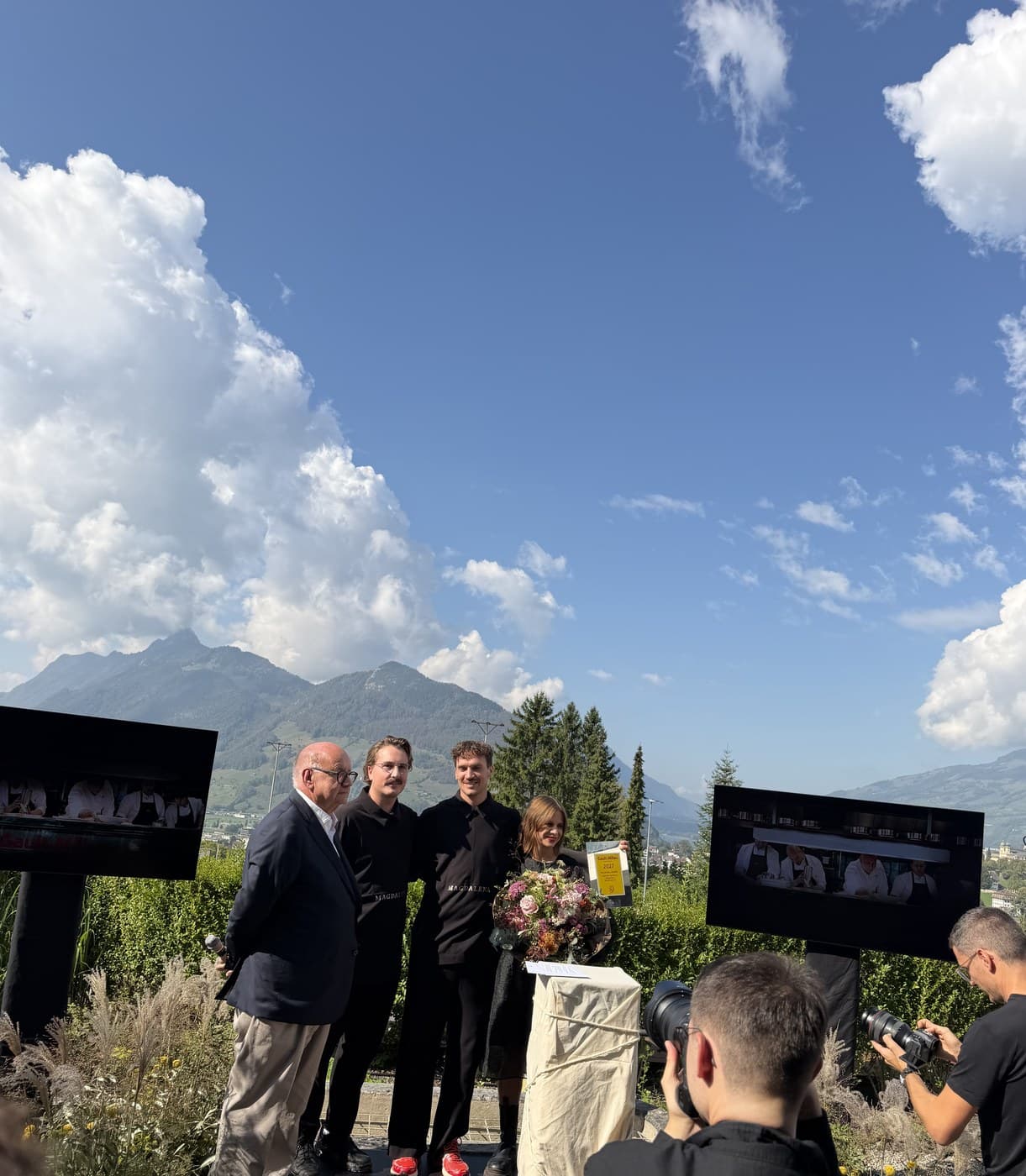
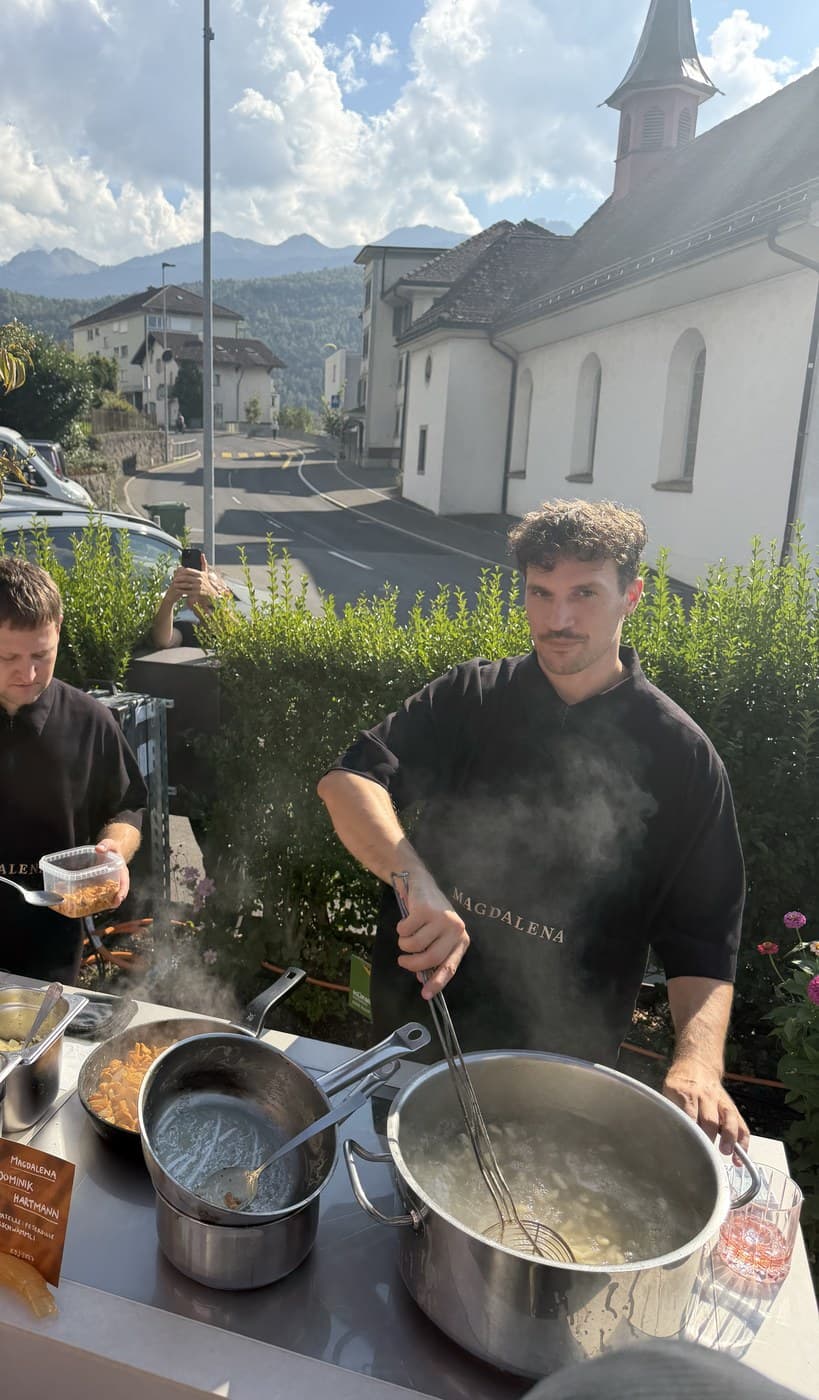
It was a warm and sunny October day, unusual for the season — the kind of weather that felt saved for the occasion. From eleven, the country's dining scene arrived on a single terrace — Magdalena's own, the valley and its mountains spread out below, GaultMillau's yellow 2027 guide passed hand to hand while two screens looped footage from the kitchen. By noon it was announced: Urs Heller called Dominik Hartmann up alone first, for the award and the speech, and Marco Appert and Adriana Hartmann joined him moments later — Adriana holding the certificate — and the first fully vegetarian Chef of the Year in the guide's history had a name.
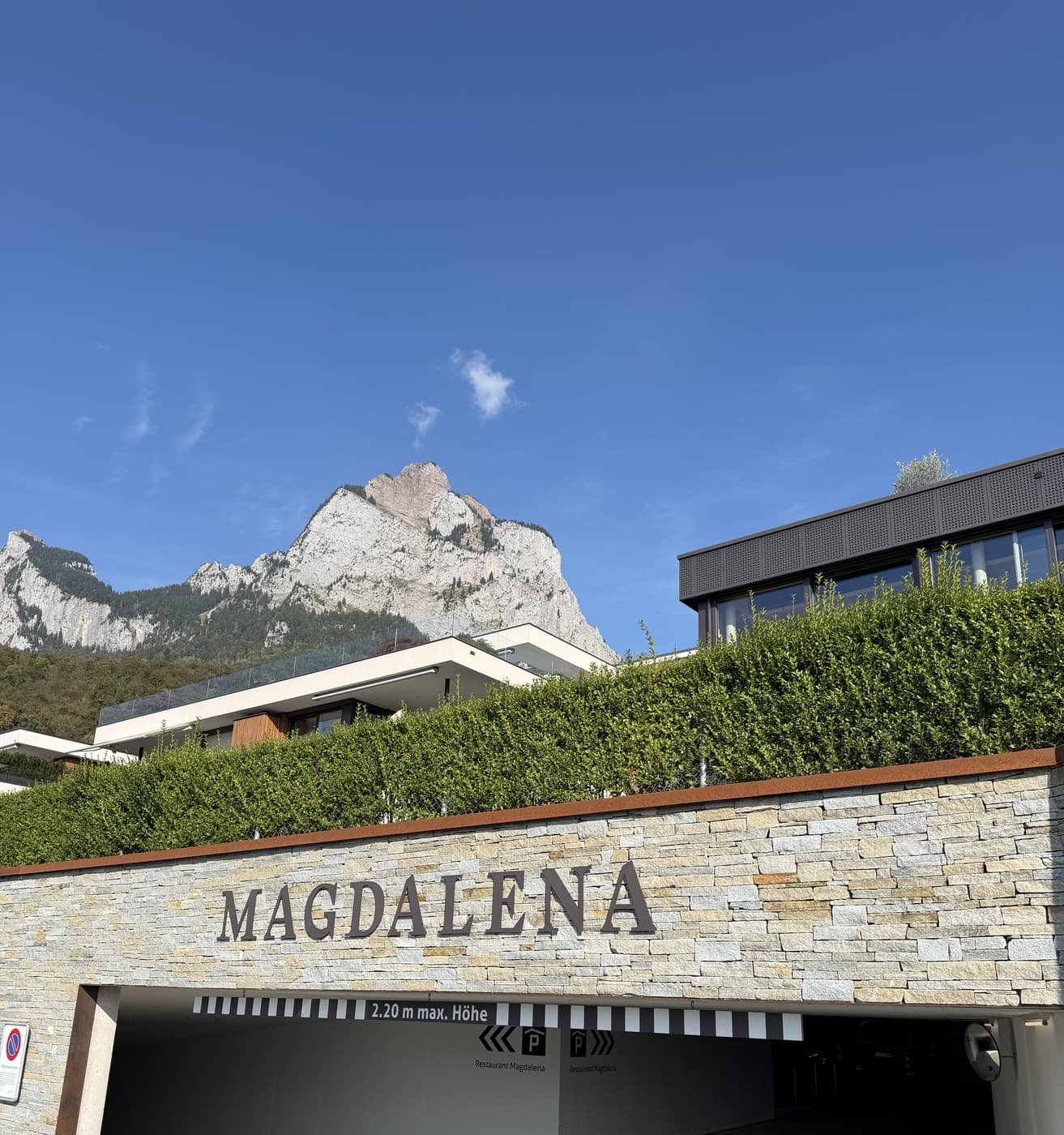
GaultMillau names its Chef of the Year at the winner's own address. This year, that meant Rickenbach — a village above Lake Lauerz in the canton of Schwyz that most of Switzerland had never had reason to look up.
A House Named After Its Neighbour
The chapel of St. Magdalena, built in 1681, stands across the street — the inn beside it took its name from it, and ran as the village tavern until the previous owner died and the house closed in 2014. Locals still call it "Magdi," short for a place everyone already knew how to find.
When the site was folded into the new residential development next door, the heir developing that project brought in three young hospitality professionals to reopen the place. As co-owner Marco Appert told us, keeping the name Magdalena was one condition of the deal — not the only one, but the one that mattered most to how the place is known today.
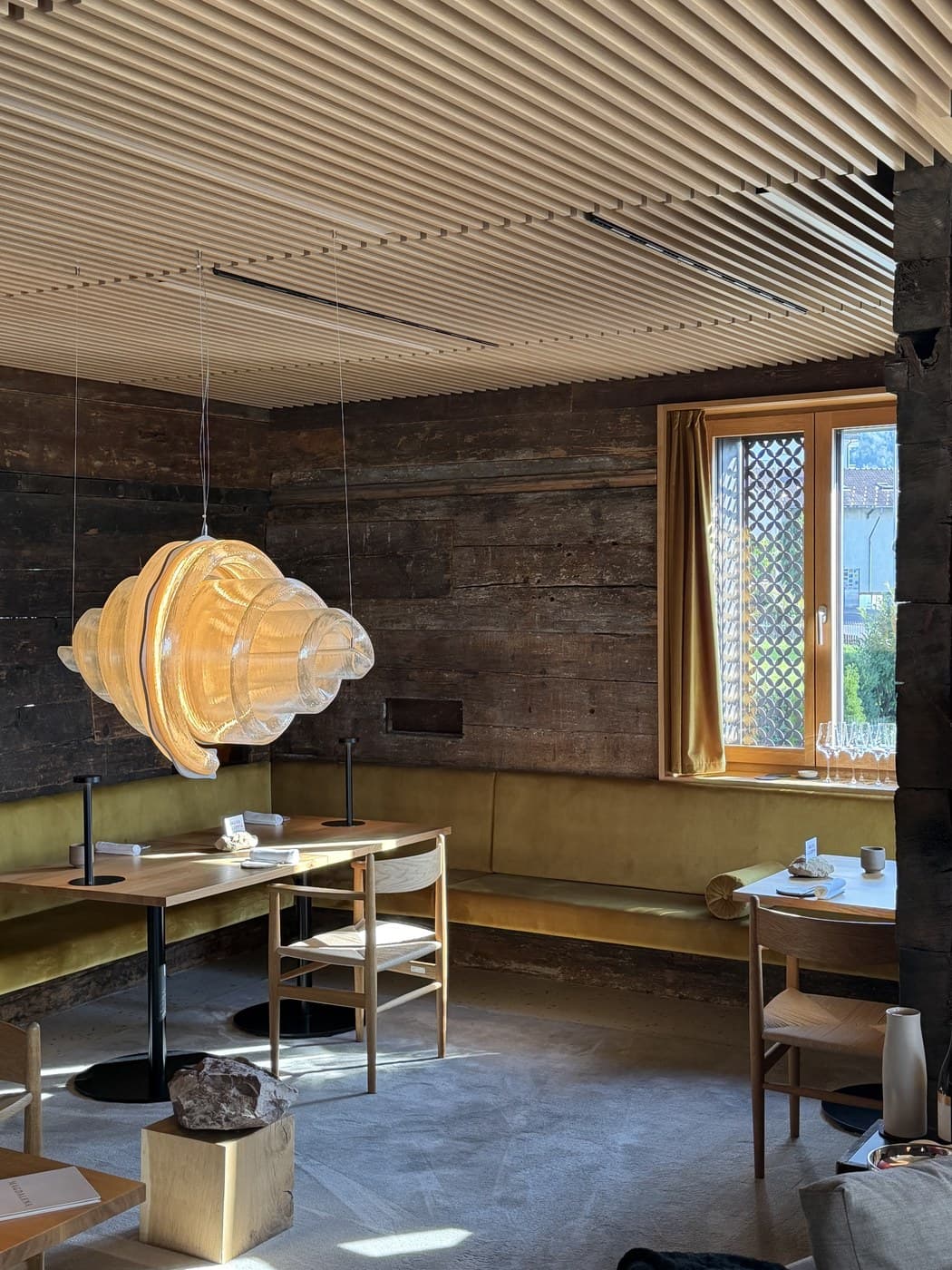
Appert and Hartmann were childhood friends from Schwyz who'd always talked about running a restaurant together — Hartmann trained under Andreas Caminada at Schloss Schauenstein, Appert at Cervo in Zermatt. Adriana, an artist by training who'd gained service experience at Caminada's own restaurants, became the third owner. The three planned the concept with Andreas and Sarah Caminada's mentorship, reopened in May 2020, and kept up to 70% of the original 700-year-old timber frame inside the new building built around it.
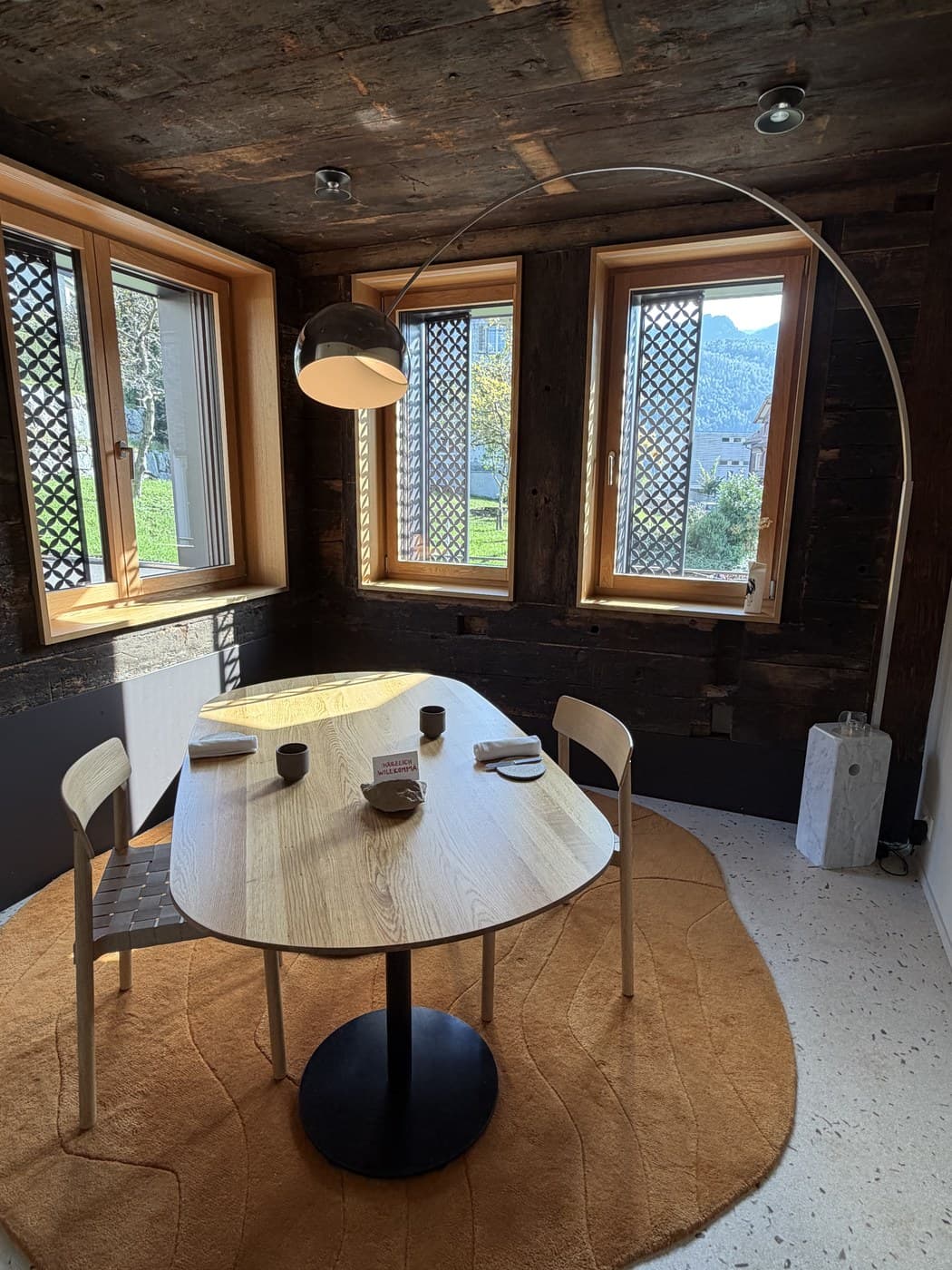
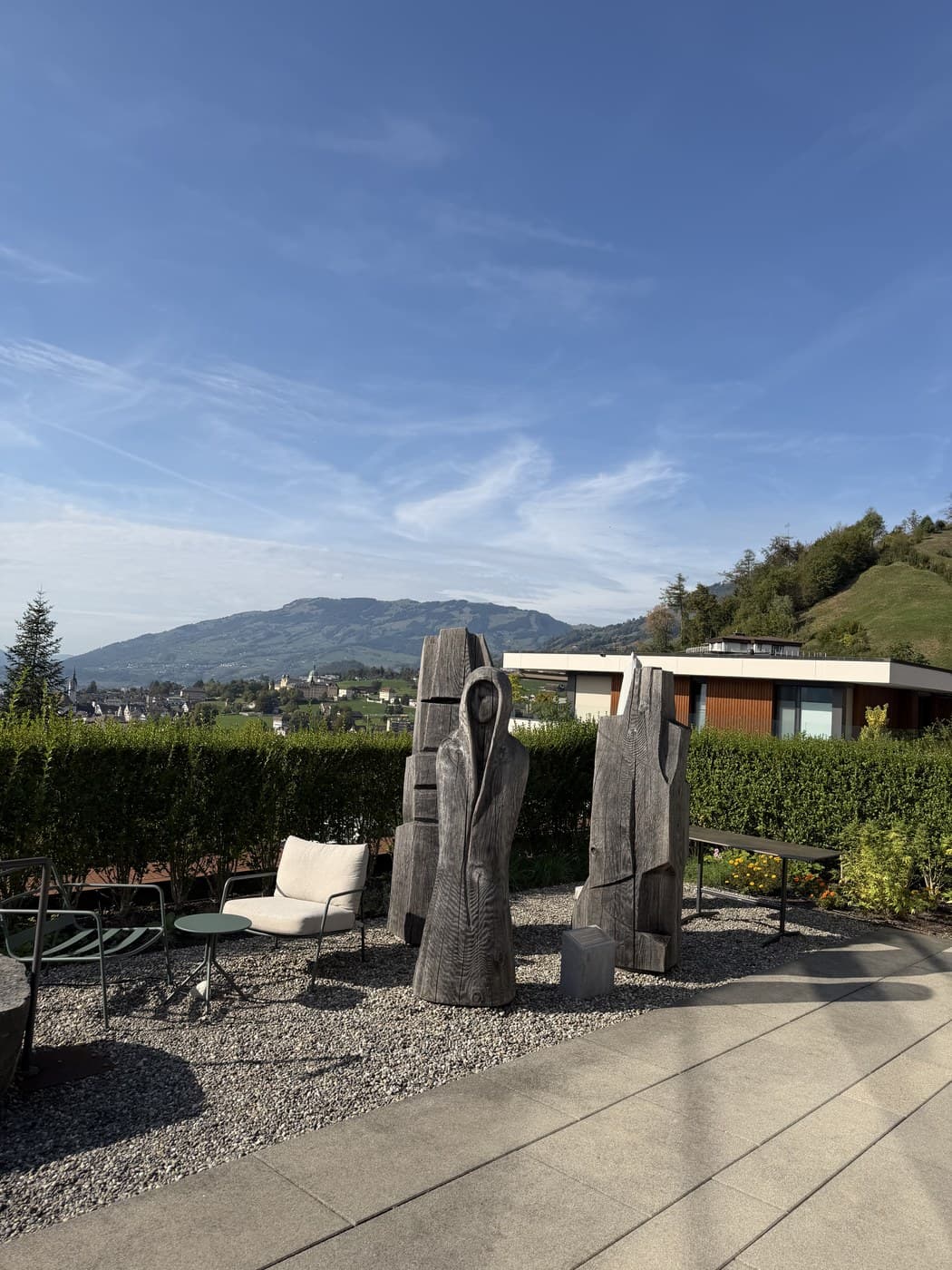
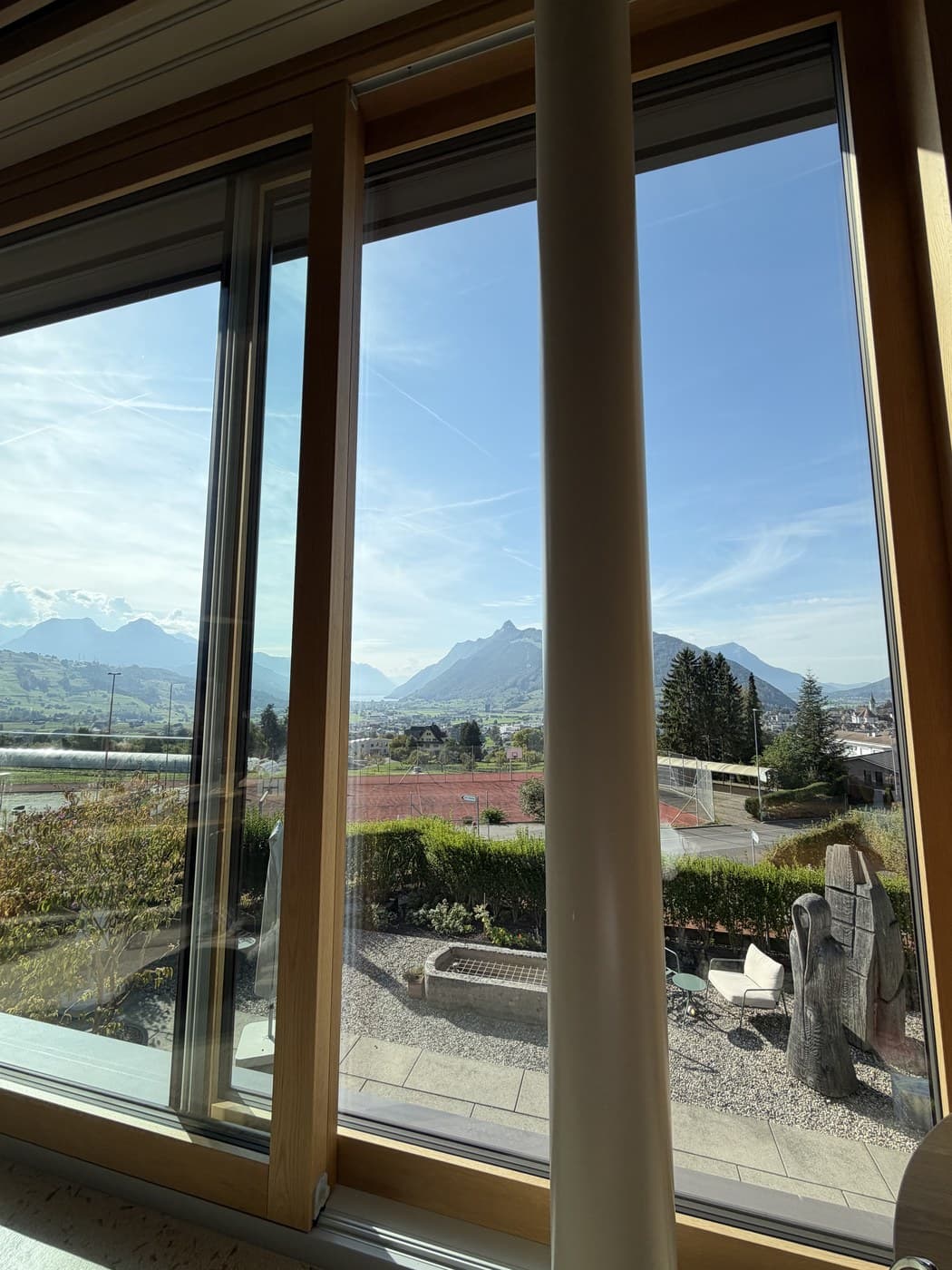
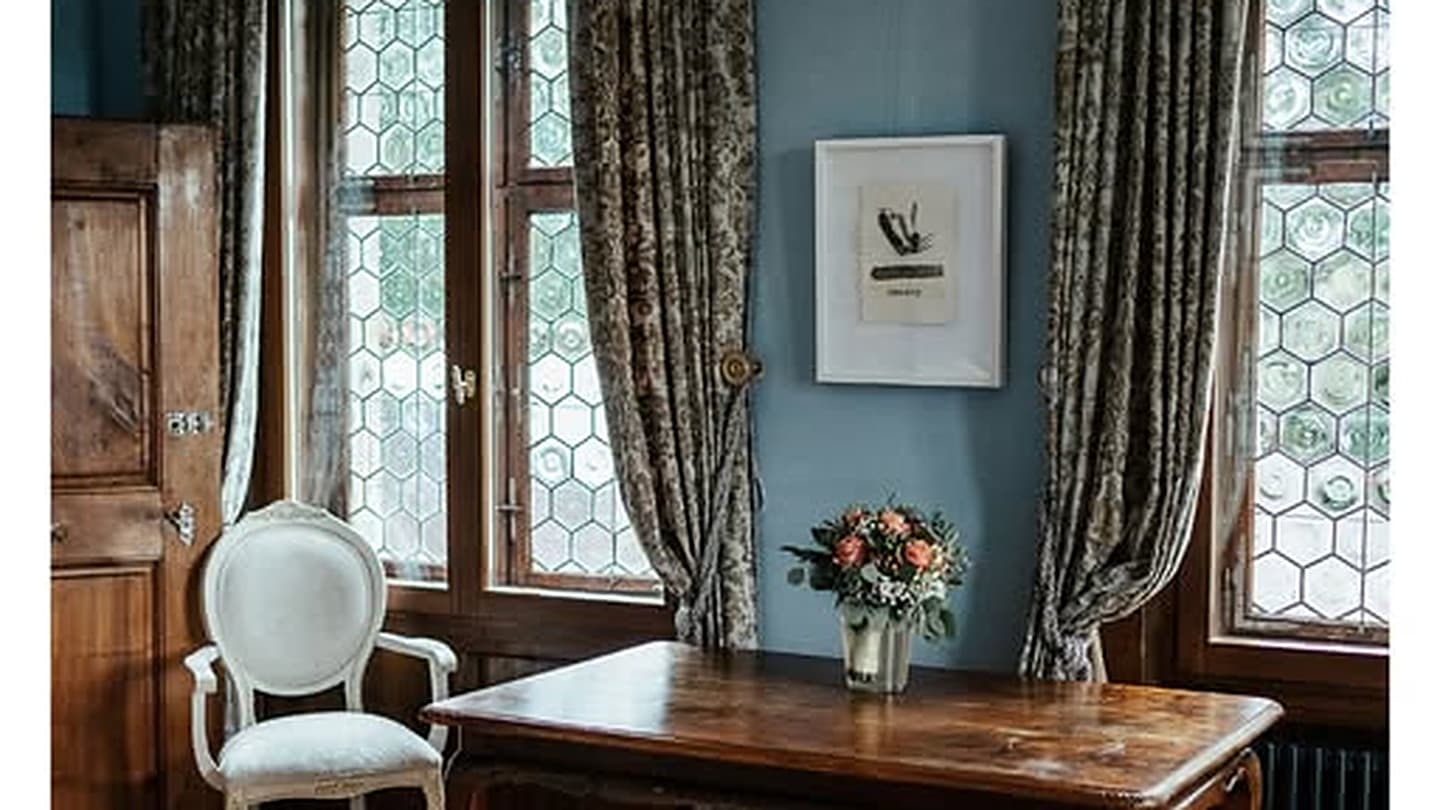
It still shows inside: dark, centuries-old timber on the walls and ceiling, set against pale oak furniture, a wool rug, and that pendant light. The windows carry a traditional Schwyzer lattice pattern. Downstairs is the Magdalena Bäckerei, open Thursday to Sunday mornings with its own terrace; outside the restaurant proper, a second terrace has its own wood sculptures — hooded, half-abstract figures — facing straight at the Rigi.
From "Discovery of the Year" to the Top Title
The house won GaultMillau's "Discovery of the Year" in 2021 at 15 points, having reopened straight into the pandemic. In 2022 the team made the harder bet: an entirely vegetarian menu, no exceptions — a move that could have cost them the following they'd just built. Instead it grew every year after, and the score climbed with it, to 18 points and two Michelin stars today. On 5 October 2026, GaultMillau named Hartmann its Chef of the Year 2027: the first time the title has gone to a chef who serves no meat at all. Seven chefs — Tanja Grandits, Peter Knogl, Franck Giovannini, Andreas Caminada, Philippe Chevrier, Heiko Nieder and Marco Campanella — actually share the guide's highest score, 19 points, which says something about how the title works: it isn't handed to the top number, it goes to the year's most significant story.
What's on the Table
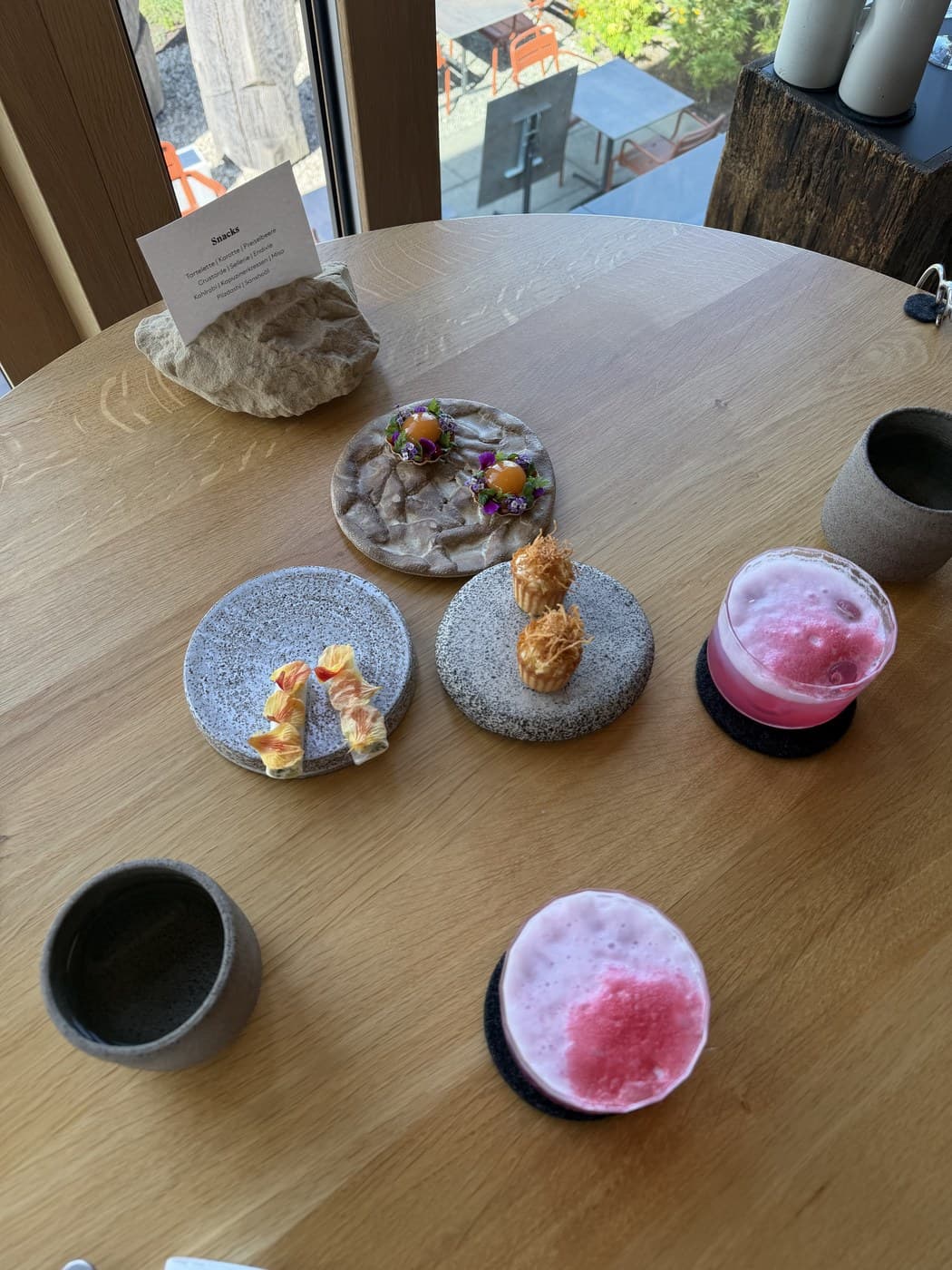
The approach declares itself from the first course. Ours opened with four snacks, each one vegetable-led and paired against something sharp, bitter or fermented: a carrot tartelette with lingonberry, a celery crustarde with endive, kohlrabi with nasturtium and miso, and a crisp "Pilzdashi" with sansho oil — mushroom dashi standing in for what would usually be a stock built on bones. Bread came warm and dark-crusted, next to whipped cultured butter, with a river stone doing double duty as a menu card stand. Alongside it came a cauliflower course, a few careful bites in a light foam.
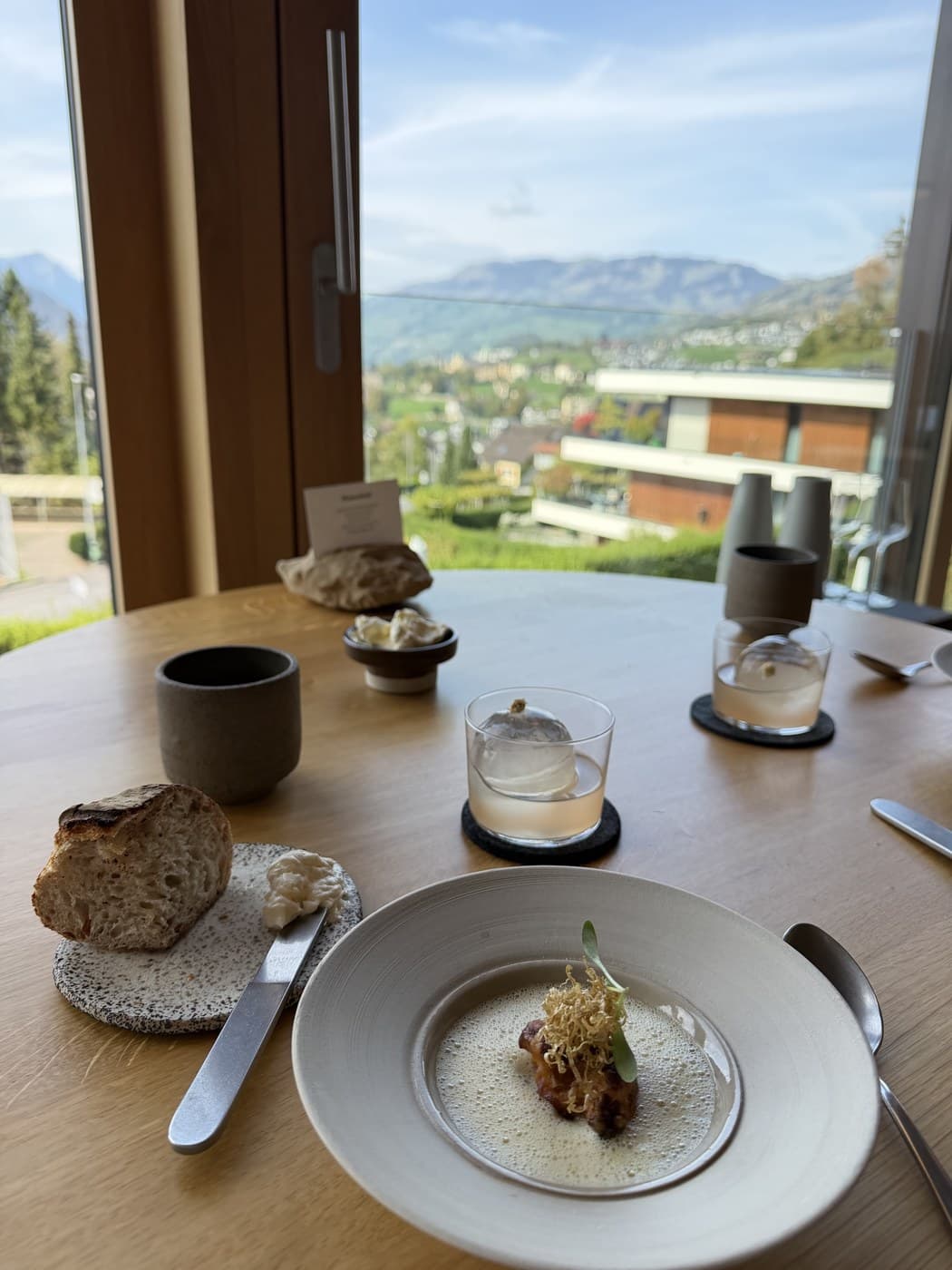
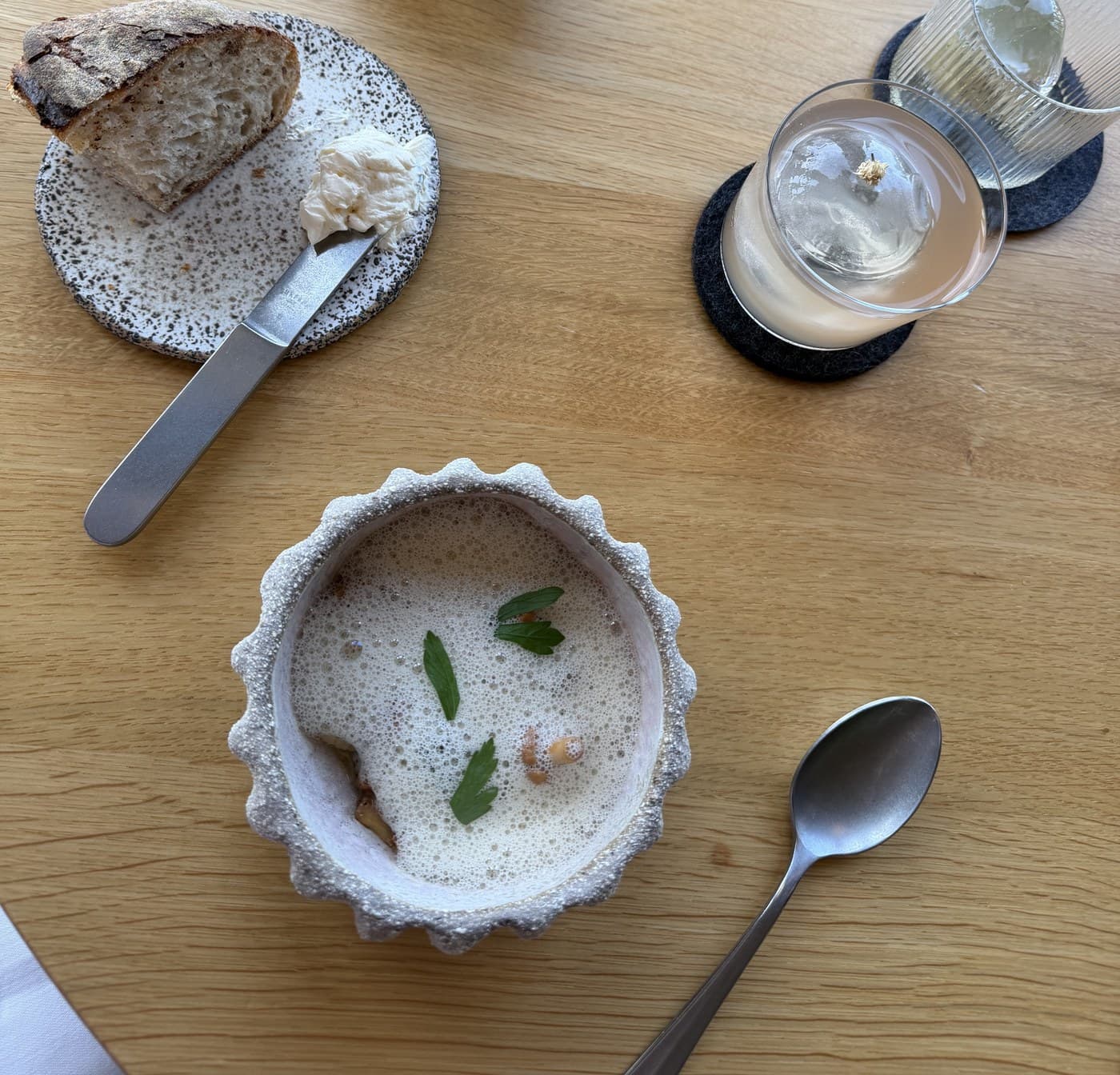
What actually stands out, beyond the set menu, is simpler: the bread — known locally as "Magda bread" — served with a butter prepared with real care, and a course built around Eierschwämmli and pasta, the same chanterelles the cooks were working at the award ceremony. Worth asking for both.
A Small Room — and a Full Buy-Out
Six people in the kitchen, three in service. The restaurant seats up to around 40 guests in total, which leaves room for anything from a romantic dinner for two to a corporate evening to a full private buy-out — rare range for a two-star kitchen. It's already a known move locally: we heard of a couple who married at the Zivilstandsamt in Schwyz itself and brought the whole wedding party down to Magdalena afterward.
Schwyz, Five Minutes Down the Valley
The canton's — and the country's — namesake town is close enough to combine with any visit. The Bundesbriefmuseum holds the Bundesbrief of 1291, long treated as Switzerland's founding document, and the main square is ringed by 17th- and 18th-century patrician houses rebuilt after a fire levelled the village centre in 1642. It's an easy pairing: an afternoon in Schwyz's old town, dinner at Magdalena.
- Address: Rickenbachstrasse 127, 6432 Rickenbach b. Schwyz
- Format: 5–7 course vegetarian surprise menu, lunch and dinner; bakery Thu–Sun, 7–11am
- Recognition: 18 GaultMillau points, two Michelin stars, Chef of the Year 2027
- Capacity: up to around 40 guests for a full buy-out
- Getting there: easiest by car — around 50 minutes from Zürich, less from Luzern
Our Take
It's a destination in the literal sense — a genuine trip, not a detour — and that's exactly the point its own title is making: the most significant story in Swiss gastronomy this year came from a village most of Switzerland had never had reason to look up. The house earns it on its own terms too. Three childhood plans followed through on, a building worth the preservation, and a kitchen that keeps proving a vegetable can carry a two-star plate on its own. What it feels like at the table is fine dining without the stiffness: modern, relaxed, and considered down to the smallest detail — the river stone holding the menu card, the hand-whipped butter, the old timber kept rather than replaced.
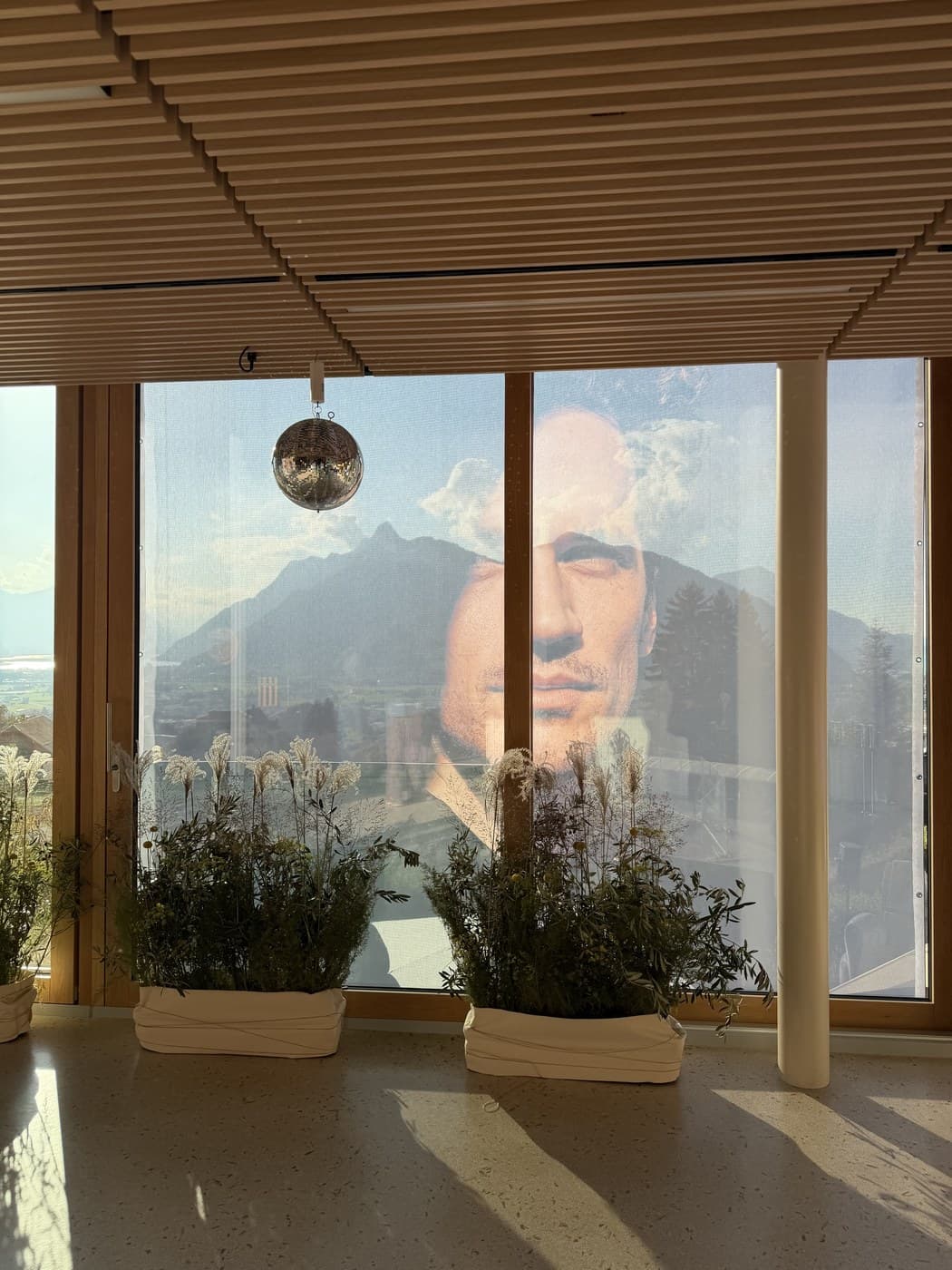
Photo credits
- All photos: Meetz, Rickenbach b. Schwyz, 4–5 October 2026.
- Award, scoring and award-history details as reported by GaultMillau and 20 Minuten.
- Founding story via marmite.ch and magdalena-immo.ch.
- Schwyz history via Gemeinde Schwyz.
Just opened in Luzern

Be the first to know
Receive an email whenever something new lands — no spam, unsubscribe anytime.